Why Low Location Lighting Is Critical for Safety
3.03.2026
When emergencies strike in industrial or maritime environments, the difference between life and death often comes down to visibility. Traditional overhead lighting systems frequently fail when they’re needed most, leaving people disoriented and unable to find safe exit routes. This is where low location lighting becomes a critical safety component that can mean the difference between successful evacuation and tragedy.
Low location lighting systems provide ground-level guidance that remains visible even when smoke, steam, or other hazards compromise visibility at eye level. These systems have become essential safety infrastructure across industries, from offshore platforms to manufacturing facilities, where reliable evacuation guidance can save lives during critical moments.
Understanding the science behind emergency evacuation, the limitations of traditional systems, and the modern solutions available will help you make informed decisions about implementing these life-saving technologies in your facility.
What makes low location lighting essential for emergency evacuation
During emergencies, human behaviour changes dramatically. People experience tunnel vision, reduced cognitive function, and heightened stress levels that impair their ability to navigate even familiar spaces. When smoke fills a corridor or stairwell, visibility can drop to mere inches, making overhead exit signs completely useless.
Low location lighting systems work because they operate at ground level, where cleaner air typically remains longer during fires or chemical incidents. Smoke and heat rise naturally, creating a layer of relatively clear air near the floor where these lighting systems can maintain visibility when ceiling-mounted systems become obscured.
The psychological impact is equally important. Ground-level lighting creates a clear path that people can follow instinctively, even when panic sets in. This continuous guidance system reduces hesitation and wrong turns that can prove fatal during evacuations.
Research shows that people naturally look down when visibility becomes compromised, making low location lighting systems align perfectly with human instincts during emergencies. The continuous line of light creates an unmistakable pathway that guides evacuees toward emergency exits.
How traditional emergency lighting fails in critical situations
Conventional overhead emergency lighting systems face several critical limitations that become apparent during real emergencies. Power dependency represents the most significant weakness, as electrical systems often fail during the very incidents when emergency lighting is most needed.
Smoke stratification can render ceiling-mounted lights invisible within minutes of an emergency. Even battery-powered emergency lights become useless when positioned above the smoke layer. Traditional systems also suffer from poor spacing, creating dark zones between fixtures where people can become disoriented.
Maintenance challenges compound these problems. Overhead emergency lighting requires regular battery testing, bulb replacement, and electrical system maintenance that facilities often neglect. When emergencies occur, these systems frequently fail to operate as intended.
The positioning of traditional emergency lighting also creates shadows and blind spots that can confuse evacuees. Single-point light sources don’t provide the continuous guidance needed for effective evacuation, particularly in complex industrial environments with machinery, equipment, and structural obstacles.
Photoluminescent vs. LED low location lighting systems
Modern low location lighting technology offers two primary approaches: photoluminescent and LED-based systems. Our 3L-PL™ photoluminescent system represents the newest generation of power-independent lighting that charges from ambient light and glows for hours during emergencies.
Photoluminescent systems offer significant advantages in installation simplicity and maintenance requirements. These systems require no electrical connections, making them ideal for retrofitting existing facilities. They’re also lighter and more cost-effective than traditional profile systems, while providing reliable performance in extreme conditions.
LED-based systems like our 3L-EP™ provide consistent illumination over extended distances, capable of lighting evacuation routes of up to 1,000 metres continuously. These systems excel in environments where ambient light levels are insufficient to charge photoluminescent materials effectively.
The choice between technologies depends on specific facility requirements, ambient lighting conditions, and maintenance capabilities. Both systems offer substantial improvements over traditional emergency lighting in terms of visibility in smoke conditions and reliability during extended emergencies.
Marine industry compliance with IMO and SOLAS standards
International maritime safety regulations mandate low location lighting systems through IMO Resolution A.752(18) and SOLAS requirements. These standards recognise that maritime emergencies often involve smoke, darkness, and complex evacuation routes that make traditional lighting inadequate.
SOLAS compliance requires continuous marking of escape routes at deck level, ensuring that crew and passengers can navigate to safety even in complete darkness or heavy smoke conditions. Modern low location lighting solutions exceed these regulatory requirements by providing enhanced visibility and longer operational periods.
We manufacture marine safety products that surpass standard requirements by a factor of four, using PVC-free and halogen-free materials that don’t contribute to toxic smoke during fires. This approach aligns with an evolving maritime safety philosophy that emphasises both evacuation guidance and the reduction of additional hazards.
Compliance involves more than just meeting minimum standards. Effective maritime safety systems must withstand extreme conditions, from Arctic cold to tropical heat, while maintaining reliable performance throughout a vessel’s operational life.
Implementing low location lighting in industrial environments
Successful implementation begins with comprehensive facility assessment and evacuation route planning. Industrial environments present unique challenges, including chemical exposures, temperature extremes, and complex layouts that require customised lighting solutions.
Design considerations include integration with existing fire safety systems, ensuring compatibility with facility maintenance schedules, and meeting industry-specific regulations. DNV certification requirements ensure that installations meet international safety standards and provide reliable performance over extended operational periods.
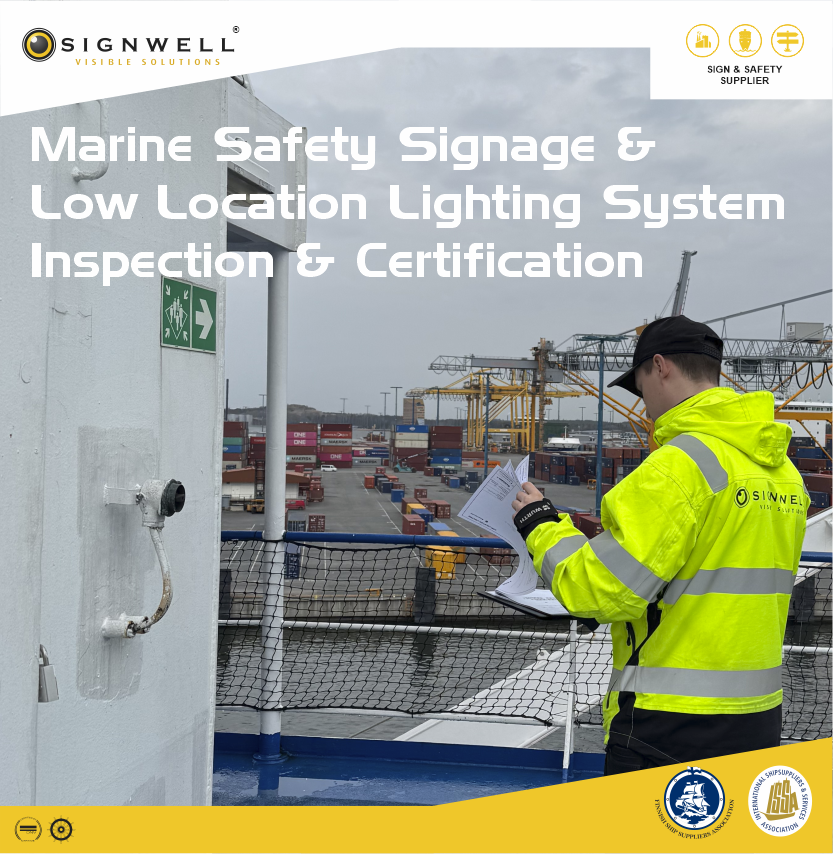
Our turnkey services cover everything from initial design through installation and ongoing maintenance. DNV-certified inspectors conduct 3L-SI™ inspections to verify system compliance and performance, ensuring that your investment in safety technology delivers the protection your facility requires.
Long-term performance optimisation involves regular system evaluation, updating installations as facilities change, and maintaining documentation for regulatory compliance. Proper implementation creates a safety infrastructure that protects lives while meeting all applicable standards and regulations.
Low location lighting represents a fundamental shift in emergency safety thinking, moving from reactive lighting that often fails when needed to proactive guidance systems that work reliably under the most challenging conditions. Whether you’re operating maritime vessels or industrial facilities, these systems provide the visibility and guidance that can save lives when traditional safety measures fall short.