What is the standard fire signage?
5.12.2025
Standard fire signage consists of internationally recognised visual communication tools that guide people to safety during fire emergencies. These signs use universal symbols and colour codes to identify fire exits, firefighting equipment, alarm points, and assembly areas. In maritime and industrial environments where seconds matter and language barriers exist, standardised fire signage creates instant recognition that can save lives regardless of a person’s native language or cultural background.
What is standard fire signage and why is it critical for safety?
Standard fire signage refers to universally recognised signs that communicate fire safety information through consistent symbols, colours, and pictograms. These signs indicate escape routes, fire equipment locations, emergency procedures, and prohibited actions during fire situations. The standardisation ensures that anyone, regardless of language or cultural background, can quickly understand critical safety information.
The importance of standardised fire signage becomes particularly evident in high-stress emergency situations. When panic sets in during a fire, people rely on visual cues rather than complex written instructions. A person from Japan working on a Norwegian vessel can instantly recognise a green running figure pointing towards an exit, whilst red fire extinguisher symbols communicate equipment locations without requiring translation.
In maritime and industrial environments, this universal understanding proves essential. Ships employ multinational crews, offshore platforms host workers from various countries, and industrial facilities often operate with diverse workforces. Standard fire signage bridges these language gaps, creating a common visual language that functions consistently across borders. The rapid recognition these signs provide can reduce evacuation times significantly, making the difference between safe escape and tragedy when every second counts during a fire emergency.
What are the main international standards for fire signage?
The primary international standards governing fire signage include IMO RESOLUTION A.752(18) for maritime applications, ISO 7010 for general safety signs, and ISO 23601 for emergency escape and evacuation plans. These standards establish consistent requirements for sign design, symbol selection, colour usage, and placement to ensure global recognition and effectiveness.
IMO RESOLUTION A.752(18) specifically addresses safety signs and notices for ships and offshore platforms, establishing requirements that ensure maritime fire signage withstands harsh marine environments whilst maintaining visibility and durability. The maritime industry later adopted ISO 7010 and ISO 24409-2 through IMO resolution A.1116(30), creating alignment between safety symbols used at sea and on land. This harmonisation increases recognisability and safety by ensuring the same identifiable safety signs appear in both environments.
ISO 7010 provides a comprehensive library of standardised safety symbols covering fire equipment, emergency exits, first aid, and warning signs. The standard specifies exact symbol designs, colour requirements, and pictogram proportions to maintain consistency across manufacturers and countries. ISO 23601 complements this by establishing requirements for emergency evacuation plans, including how fire signage should integrate into overall escape route guidance systems.
Regional variations exist, particularly in how standards apply differently across maritime and onshore industrial settings. Maritime environments follow stricter material requirements due to saltwater exposure, temperature extremes, and vibration concerns. Onshore industrial facilities may have additional local regulatory requirements layered atop international standards, requiring careful assessment of which standards apply to specific installations.
What symbols and colours are used in standard fire signage?
Standard fire signage employs a specific colour coding system where red identifies fire equipment, green indicates emergency exits and safe routes, and white pictograms appear on coloured backgrounds for maximum contrast. Universal symbols include directional arrows for fire exits, flame symbols for fire equipment, hand pressing a call point for alarms, and assembly point markers for evacuation gathering locations.
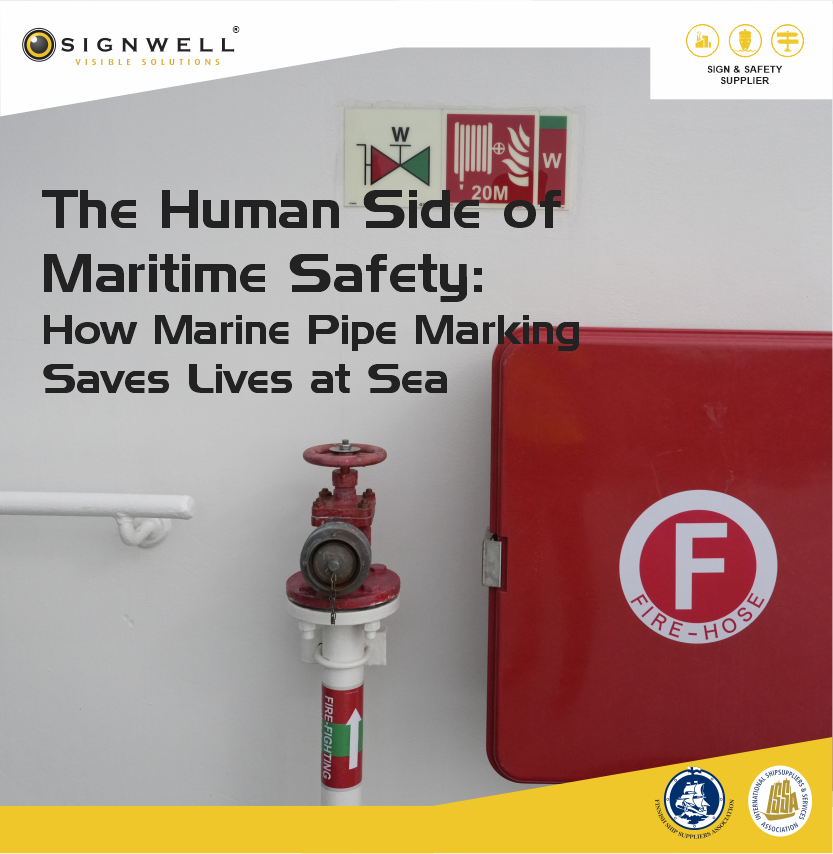
The red colour designation serves exclusively for fire equipment identification, including extinguisher locations, fire hose reels, fire blankets, and fire alarm call points. This consistent use of red creates immediate association with firefighting resources. The symbols themselves are simple, bold pictograms: a fire extinguisher shown in profile, a hose reel depicted with clear circular coil, and a hand activating an alarm call point.
Green backgrounds with white pictograms mark all emergency escape routes and exits. The running figure symbol, showing a person moving towards a door, has become universally recognised. Directional arrows combine with this symbol to indicate the direction of travel towards safety. First aid equipment also uses green identification, though with different pictograms to distinguish medical resources from escape routes.
This visual system works together to create instant recognition during high-stress situations. The colour coding allows people to scan an environment quickly and identify what they need: red for fighting the fire, green for escaping it. The simplified pictograms eliminate the need for text, functioning across language barriers. The high contrast between white symbols and coloured backgrounds ensures visibility even in smoke-filled or poorly lit conditions, maintaining effectiveness when emergency situations compromise normal lighting.
How do photoluminescent fire signs differ from traditional signage?
Photoluminescent fire signs absorb ambient and artificial light, then glow in darkness without requiring electrical power. Unlike traditional painted or reflective signs that become invisible during power failures, photoluminescent materials store light energy and release it gradually, providing visibility for hours after light sources disappear. This technology offers significant advantages over electrically powered emergency lighting systems in terms of reliability, maintenance costs, and compliance with modern safety standards.
The key difference lies in operational independence. Traditional emergency lighting requires electrical connections, battery backup systems, and regular testing to ensure functionality. Photoluminescent signs need only exposure to light sources during normal operations to remain effective during emergencies. When power fails during a fire, electrically powered systems may malfunction due to damaged wiring or depleted batteries, whilst photoluminescent signs continue glowing reliably.
Performance requirements for photoluminescent fire signs specify minimum luminance levels and glow duration. Quality photoluminescent materials must achieve specific brightness measurements immediately after light exposure and maintain visibility for designated time periods. Modern photoluminescent fire signage typically provides effective visibility for several hours in complete darkness, sufficient for emergency evacuation procedures.
The maintenance advantages prove substantial. Photoluminescent signs require no electrical installation, reducing initial costs and eliminating ongoing energy consumption. There are no bulbs to replace, batteries to test, or electrical connections to inspect. The signs simply need adequate light exposure during normal operations and periodic cleaning to maintain effectiveness. This simplicity makes them particularly valuable in maritime and industrial environments where maintenance access may be challenging and system reliability is paramount.
What fire signage is specifically required for ships and offshore platforms?
Ships and offshore platforms must comply with SOLAS (Safety of Life at Sea) requirements, which mandate comprehensive fire safety signage including IMO-compliant fire control plans, fire door identification, low location lighting systems for escape routes, and fire equipment markers. These requirements exceed typical onshore standards due to the unique challenges of maritime emergencies where evacuation options are limited and environmental conditions are extreme.
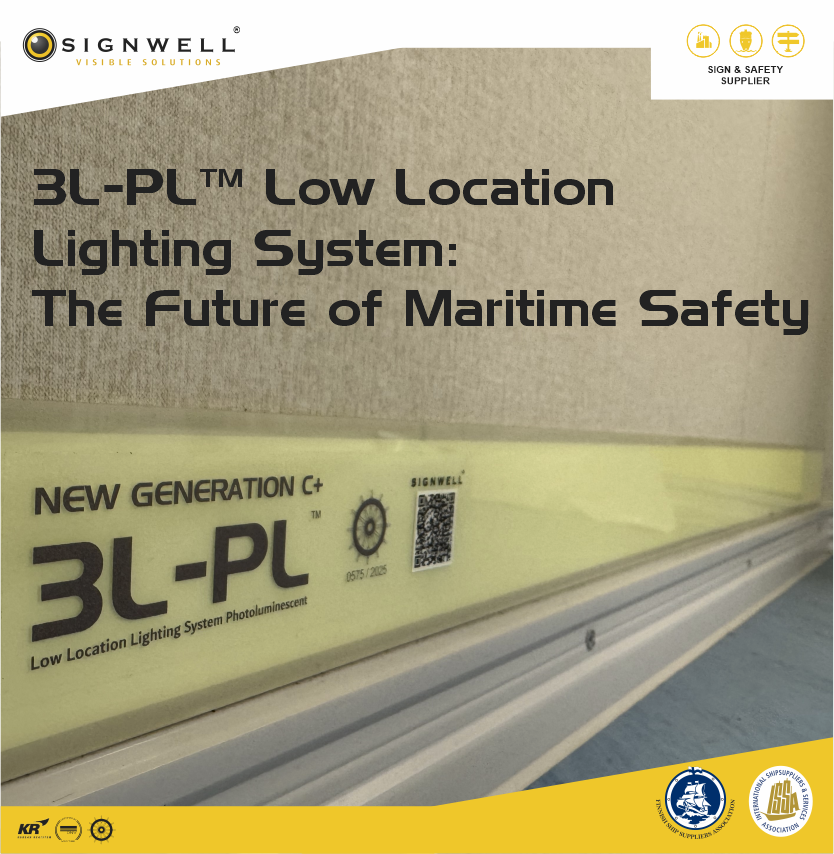
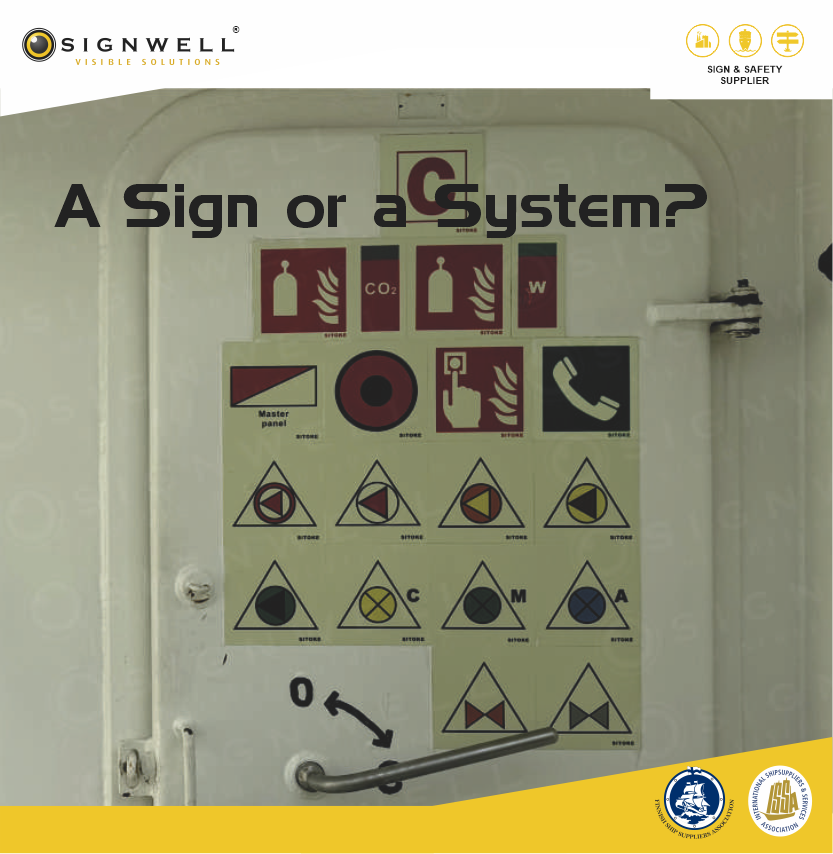
IMO-compliant fire control plans must be displayed in designated locations, showing fire zones, firefighting equipment locations, ventilation systems, and emergency escape routes. Fire door signs identify fire-resistant barriers that compartmentalise vessels, preventing fire spread between zones. Low location lighting systems guide people along escape routes at floor level, remaining visible when smoke obscures overhead signs. Fire equipment identification markers clearly indicate extinguisher types, hose reel locations, and alarm activation points.
Maritime environments demand specialised signage that withstands conditions no onshore facility faces. Constant saltwater exposure corrodes traditional materials, extreme temperature fluctuations stress adhesives and substrates, and continuous vibration loosens improperly mounted signs. We manufacture our New Generation IMO signs from innovative materials that are PVC-free and halogen-free, specifically engineered for maritime durability and longevity.
Material requirements reflect these environmental challenges. Signs must be flame retardant, preventing them from contributing to fire spread. Halogen-free and non-toxic properties ensure signs don’t release dangerous gases when exposed to heat or flames. UV resistance prevents fading and discolouration from constant sun exposure on deck areas. The materials must maintain adhesion and structural integrity across temperature ranges from Arctic cold to tropical heat, whilst glossy finishes allow easy cleaning to remove salt deposits and maintain visibility throughout the vessel’s operational life.
How do you ensure your fire signage remains compliant and effective?
Maintaining fire signage compliance requires regular inspection protocols that check for physical damage, colour fading, obstruction by equipment or materials, and proper visibility from expected viewing distances. Inspections should verify that signs remain securely mounted, symbols are clearly recognisable, and no changes to the facility layout have rendered sign placement ineffective. Professional inspection services can provide certified assessments that document compliance with applicable standards.
Inspection protocols should examine each sign systematically. Check for physical damage including cracks, peeling, or impact marks that compromise visibility. Assess colour integrity, as faded signs lose the immediate recognition that colour coding provides. Verify that nothing obstructs sign visibility, as equipment, inventory, or structural modifications often block previously clear sightlines. Confirm that signs remain visible from the distances people will view them during normal operations and emergency situations.
Signs require replacement when material degradation compromises their function or when regulatory changes mandate updated symbols or information. Photoluminescent signs may lose charging efficiency over time, reducing their glow duration below required standards. Adhesive failure can cause signs to detach, whilst environmental exposure may degrade materials beyond acceptable condition. Standard updates occasionally introduce new symbols or modify existing ones, requiring replacement to maintain compliance with current requirements.
Proper installation positioning significantly affects fire signage effectiveness during evacuations. Signs should be mounted at consistent heights that place them within normal sightlines, typically between 1.5 and 2 metres above floor level. Spacing along escape routes should ensure the next sign remains visible from each sign’s location, creating continuous guidance. Corner locations require signs on both approach walls to guide people through direction changes. We offer complete implementation services covering design, manufacturing, installation, and maintenance to ensure safety signage systems are installed correctly and remain effective throughout their service life.
Understanding standard fire signage requirements helps create safer environments in maritime and industrial settings. The universal symbols, standardised colours, and proven technologies work together to guide people to safety when emergencies occur. Whether you’re specifying signs for a new vessel, upgrading an offshore platform, or maintaining an existing industrial facility, choosing compliant, durable fire signage from experienced specialists ensures your safety systems perform reliably when lives depend on them. Proper selection, installation, and maintenance of fire signage represents an essential investment in protecting people and meeting international safety obligations.