What is meant by maritime safety?
11.12.2025
Maritime safety refers to the comprehensive framework of regulations, equipment, training procedures, and operational standards designed to protect human life, vessels, and the marine environment at sea. This system encompasses everything from vessel construction requirements to emergency response protocols, creating multiple layers of protection for crews, passengers, and cargo. Understanding maritime safety is essential for anyone involved in shipping, offshore operations, or maritime industries.
What is maritime safety and why does it matter?
Maritime safety is a comprehensive system encompassing regulations, equipment, training, and procedures designed to protect lives, vessels, and the marine environment. It combines international standards, technological solutions, and human expertise to prevent accidents and respond effectively when emergencies occur. This integrated approach ensures that ships can operate safely across global waters whilst maintaining consistent safety standards regardless of flag state or operational area.
The importance of maritime safety extends far beyond individual vessels. Every year, thousands of seafarers work in challenging conditions, transporting approximately 90% of global trade across international waters. Effective maritime safety systems protect crew members from occupational hazards, secure valuable cargo worth billions of pounds, and prevent environmental disasters that could devastate marine ecosystems for decades.
The human consequences of maritime accidents can be devastating. When safety systems fail, crew members face life-threatening situations including fire, flooding, collision, or abandoning ship in hostile conditions. The economic impact is equally significant, with vessel losses, cargo damage, environmental cleanup costs, and legal liabilities potentially reaching hundreds of millions of pounds for a single incident.
Prevention remains far more effective than response. Well-designed safety systems reduce accident frequency, minimize incident severity when problems do occur, and ensure that crews can respond confidently during emergencies. This proactive approach protects international trade continuity, maintains insurance affordability, and preserves the marine environment for future generations.
What are the main international regulations governing maritime safety?
The Safety of Life at Sea (SOLAS) Convention serves as the cornerstone of international maritime safety regulation. Established by the International Maritime Organization (IMO), SOLAS sets minimum safety standards for vessel construction, equipment, operation, and crew training that apply to commercial ships engaged in international voyages. These regulations are regularly updated to incorporate technological advances and lessons learned from maritime incidents.
SOLAS covers essential safety areas including ship construction standards that ensure structural integrity, stability requirements that prevent capsizing, fire protection systems that contain and suppress fires, life-saving appliances that enable safe evacuation, and radio communications equipment that maintains contact during emergencies. The convention also mandates safety management systems that create organisational frameworks for identifying and controlling risks.
Beyond SOLAS, the IMO administers numerous related conventions and codes that address specific safety aspects. The International Safety Management (ISM) Code requires shipping companies to establish safety management systems with clear procedures and accountability. The Standards of Training, Certification and Watchkeeping (STCW) Convention ensures seafarers possess the necessary competence to perform their duties safely.
International cooperation ensures consistent safety standards across global shipping. Flag states implement these regulations through national legislation, port states verify compliance through inspections, and classification societies provide technical oversight. This multilayered approach creates a safety net that catches deficiencies before they lead to accidents, regardless of where a vessel operates or which flag it flies.
What safety equipment and systems are required on ships?
Ships must carry comprehensive safety equipment covering life-saving appliances, fire protection systems, navigation equipment, communication devices, and safety signage. Life-saving equipment includes lifeboats, life rafts, life jackets, immersion suits, and rescue boats sized to accommodate everyone onboard. Fire protection systems encompass detection systems, fixed firefighting installations, portable extinguishers, and fire-resistant construction materials that contain fires and protect escape routes.
Navigation equipment ensures safe passage and collision avoidance through radar systems, electronic chart displays, automatic identification systems, and gyrocompasses. Communication devices maintain contact with shore authorities and other vessels through VHF radios, satellite communications, and emergency position-indicating radio beacons that activate automatically if a vessel sinks.
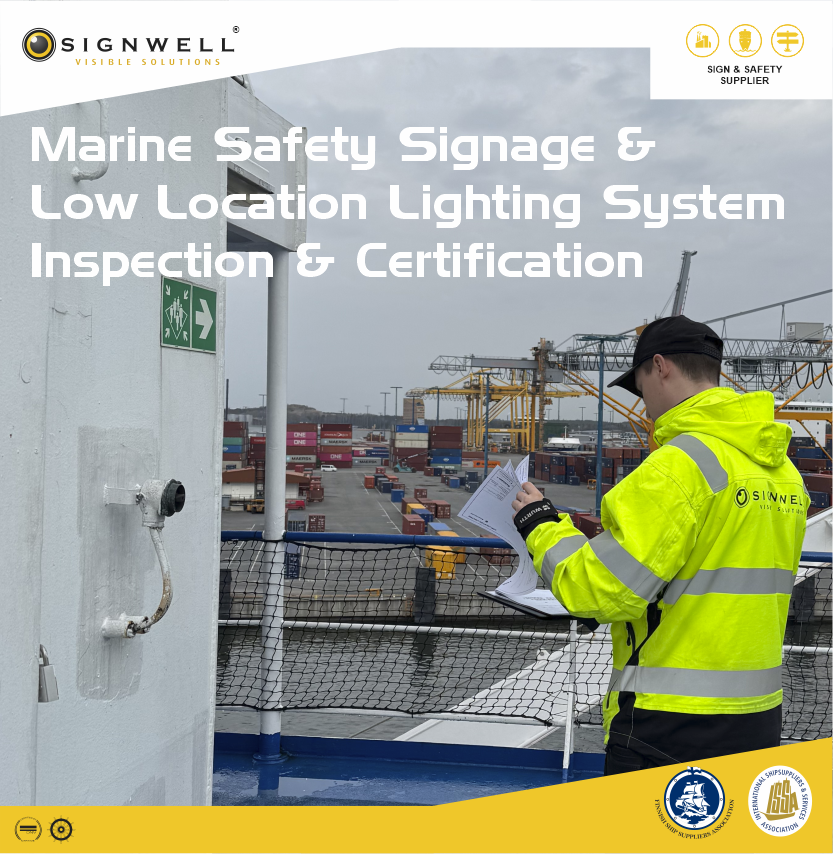
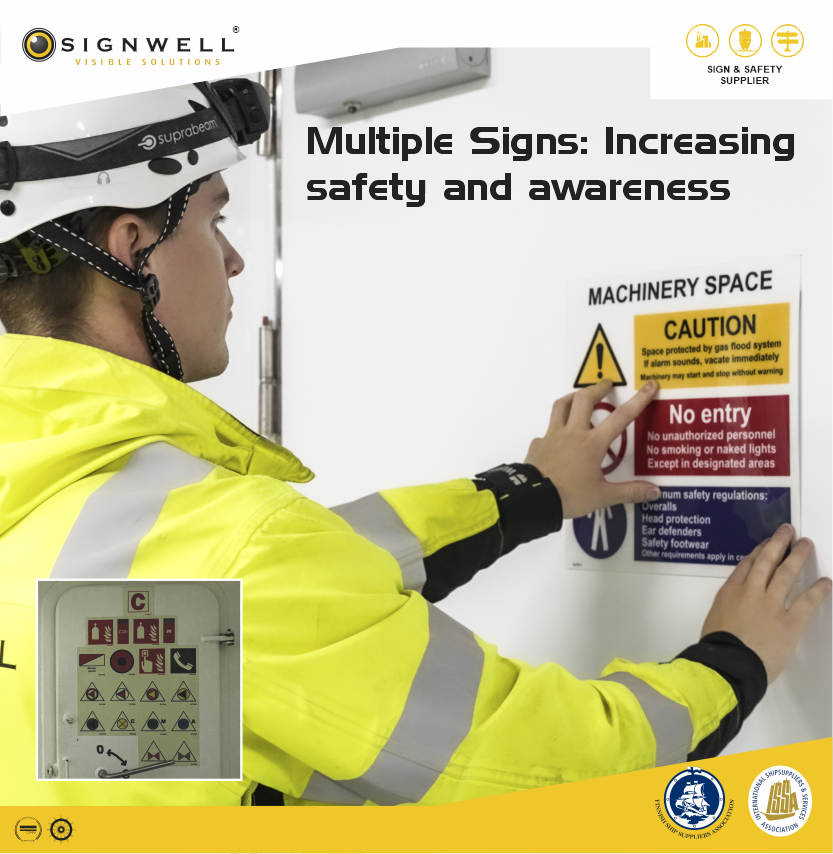
Safety signage and marking systems provide critical guidance during both normal operations and emergencies. We manufacture IMO-compliant safety signs according to ISO standards, ensuring internationally recognisable symbols that crew members understand regardless of their native language. These signs clearly mark fire extinguishers, fire alarms, rescue equipment, and emergency exits, enabling rapid location of safety equipment even under stress.
Low Location Lighting systems represent a crucial advancement in emergency evacuation technology. These photoluminescent or electrically powered systems provide guidance at floor level where visibility remains better during smoke-filled conditions. Photoluminescent systems absorb ambient light and glow for hours without electrical power, whilst electric LED systems provide continuous illumination along escape routes. Both systems guide crew members to safety when conventional overhead lighting fails or becomes obscured by smoke.
Pipe marking systems ensure clear communication about vessel systems during normal operations and emergencies. Properly marked pipes prevent confusion about contents, flow direction, and system function, reducing the risk of operational errors that could create safety hazards. Clear identification helps emergency responders understand vessel systems quickly when every second counts.
How do ships prepare for emergency situations at sea?
Emergency preparedness begins with comprehensive evacuation procedures and safety drills that ensure every crew member knows their responsibilities during different emergency scenarios. SOLAS requires regular drills covering fire response, abandon ship procedures, man overboard recovery, and damage control. These exercises build muscle memory and confidence, enabling crews to respond effectively even when facing real danger.
Crew training requirements extend beyond basic drills to include specialised instruction in firefighting, first aid, survival craft operation, and emergency leadership. Officers receive additional training in crisis management, damage assessment, and coordinating complex emergency responses. This layered competence ensures that someone onboard can handle virtually any emergency situation that might arise.
Safety management systems create organisational frameworks that prevent incidents through risk assessment, procedure development, and continuous improvement. These systems identify potential hazards before they cause accidents, establish clear procedures for routine and emergency operations, and create feedback loops that capture lessons from near-misses and incidents. Regular internal audits verify that safety procedures remain effective and that crews follow established protocols.
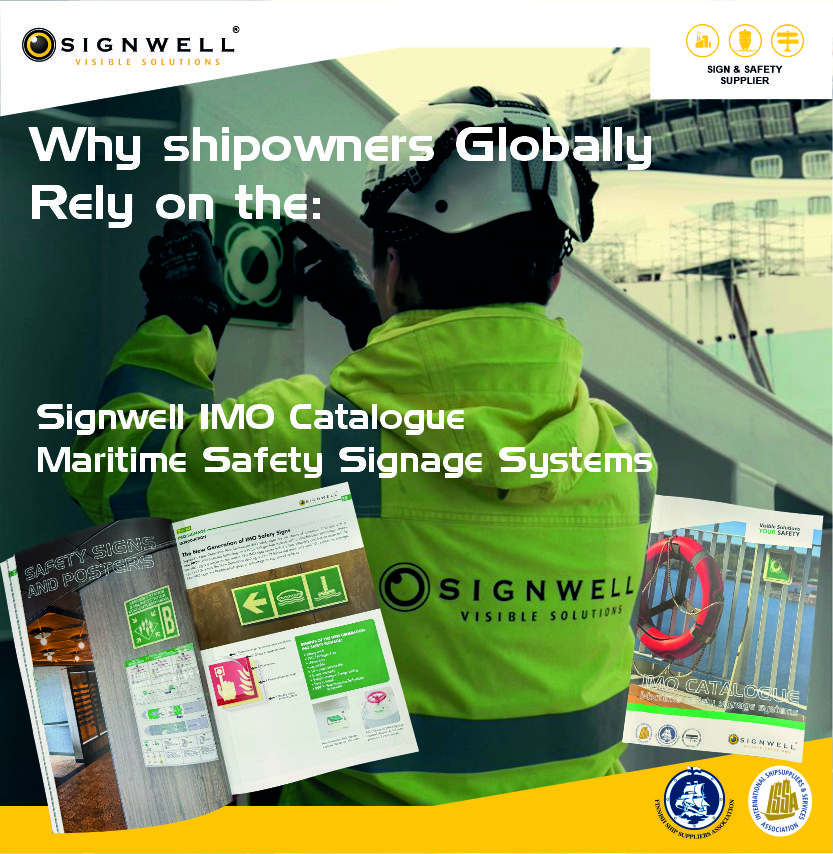
Proper safety marking systems enable effective evacuation even in darkness or smoke-filled conditions. Our New Generation IMO signs use environmentally friendly materials that are PVC-free and halogen-free whilst providing luminescence that exceeds standard requirements. The signs remain visible for over 10 years without discolouration, ensuring that safety information remains clear throughout a vessel’s service life.
Escape route signage must be immediately recognisable and impossible to misinterpret during high-stress situations. Standardised symbols eliminate language barriers, whilst strategic placement ensures visibility from any location. Emergency lighting systems complement signage by maintaining illumination along escape routes, with photoluminescent systems providing backup when electrical systems fail.
The integration of safety signage, emergency lighting, and crew training creates a complete emergency preparedness system. When crews understand procedures, equipment functions reliably, and guidance remains visible regardless of conditions, vessels can respond effectively to emergencies. This comprehensive approach transforms regulatory compliance into genuine safety capability that protects lives at sea.