Understanding Glow in the Dark Signage Standards
25.03.2026
When emergencies strike in industrial or marine environments, traditional lighting systems can fail exactly when you need them most. Power outages, smoke, and equipment failures can leave workers and crew members disoriented in critical moments. This is where glow-in-the-dark signage becomes a lifeline, providing reliable guidance even in complete darkness.
Understanding the standards governing photoluminescent signage isn’t just about regulatory compliance; it’s about creating safety systems that genuinely protect lives when conventional solutions fall short. We’ll explore the essential standards, performance requirements, and practical considerations that ensure your safety signage works when it matters most.
What makes glow-in-the-dark signage essential for safety
Photoluminescent technology operates on a remarkably simple principle. These materials absorb ambient light energy during normal conditions and slowly release it as visible light in darkness. Unlike battery-powered emergency lighting, photoluminescent signage requires no electrical connection, making it immune to power failures and electrical system damage.
The visibility advantages over traditional signage become apparent during emergencies. While conventional signs disappear in darkness or smoke-filled environments, photoluminescent materials continue glowing for hours. This sustained visibility proves crucial during evacuations, when people need clear directional guidance to emergency exits and assembly points.
Regulatory bodies mandate these systems because they address fundamental safety vulnerabilities. The International Maritime Organization (IMO) and various industrial safety authorities recognise that electrical emergency lighting systems can fail due to fire damage, flooding, or power system failures. Photoluminescent systems provide redundant safety guidance that operates independently of ship or facility infrastructure.
In marine environments, where evacuation routes may be unfamiliar to passengers and crew rotation is common, consistent wayfinding becomes critical. Industrial facilities face similar challenges with shift workers and contractors who may not know alternative escape routes during emergencies.
Key international standards governing photoluminescent signage
The landscape of photoluminescent signage standards centres on several key international frameworks. ISO 15370:2021 represents the most comprehensive global standard, establishing performance requirements for photoluminescent safety way guidance systems. This standard specifies luminance levels, testing procedures, and installation guidelines for both marine and land-based applications.
ISO 3864 governs the graphical symbols and colours used in safety signage, ensuring universal recognition regardless of language barriers. This standard becomes particularly important in international shipping and multinational industrial operations, where clear visual communication transcends linguistic differences.
SOLAS (Safety of Life at Sea) requirements, implemented through IMO Resolution A.752(18), mandate specific photoluminescent marking systems for passenger ships. These regulations require low-location lighting systems that guide people to safety even when corridors fill with smoke. The standards specify installation heights, spacing requirements, and performance criteria for marine applications.
Regional standards like PSK 0903, which we helped develop for the Finnish market, address specific local requirements while maintaining compatibility with international frameworks. These standards often incorporate lessons learned from regional incidents and environmental conditions that may not be fully addressed in global standards.
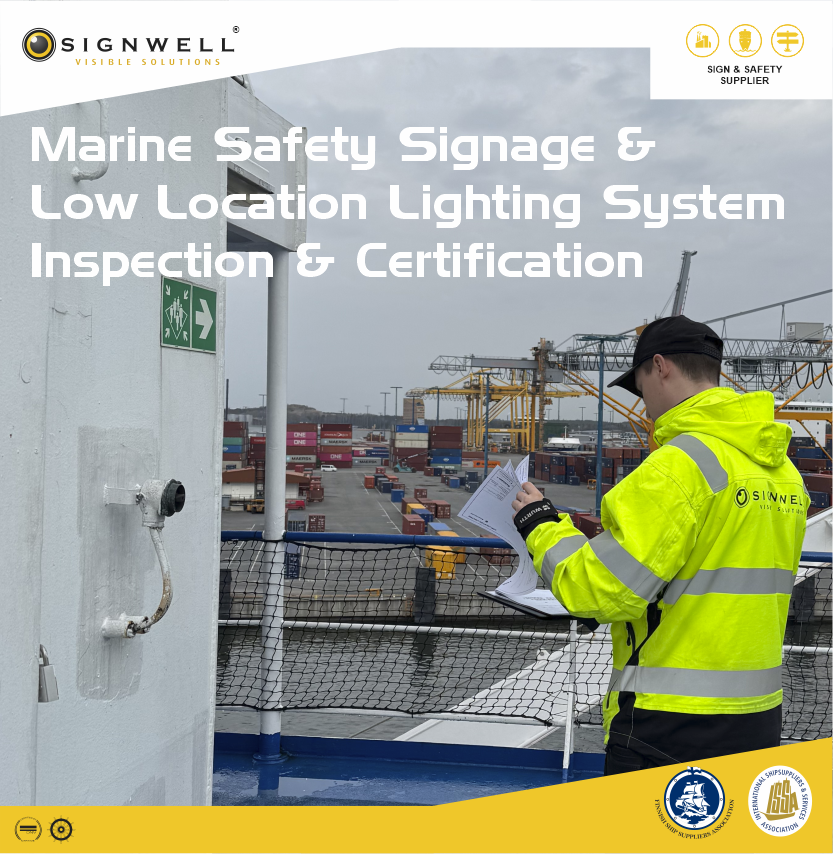
Compliance requires proper certification processes, including third-party testing and ongoing maintenance verification. We conduct regular inspections through our DNV-certified assessors to ensure systems maintain their specified performance levels throughout their operational life.
How photoluminescent materials perform in real conditions
Understanding real-world performance requires examining specific technical parameters. Luminance levels must meet minimum thresholds measured in millicandelas per square metre (mcd/m²). High-quality photoluminescent materials typically achieve initial luminance levels of 150–300 mcd/m² after standard light exposure, gradually decreasing over time while remaining visible for 8–12 hours.
Charging requirements vary based on ambient lighting conditions. Most systems need at least 25 lux of ambient light for one hour to achieve full charge capacity. However, partial charging occurs continuously under lower light levels, making these systems functional even in poorly lit environments.
Temperature resistance becomes critical in industrial and marine applications. Premium photoluminescent materials maintain performance across temperature ranges from -40°C to +150°C, ensuring functionality in Arctic shipping routes, engine rooms, and industrial processes involving extreme temperatures.
UV stability determines long-term performance, particularly for exterior applications. High-quality materials resist UV degradation for over 150,000 hours of exposure, maintaining both photoluminescent properties and physical integrity. This durability proves essential for offshore installations and exterior marine applications, where replacement costs are substantial.
Performance degradation factors include contamination, physical damage, and improper maintenance. Salt spray in marine environments, chemical exposure in industrial settings, and inadequate cleaning procedures can all reduce effectiveness over time.
Common compliance mistakes that compromise safety systems
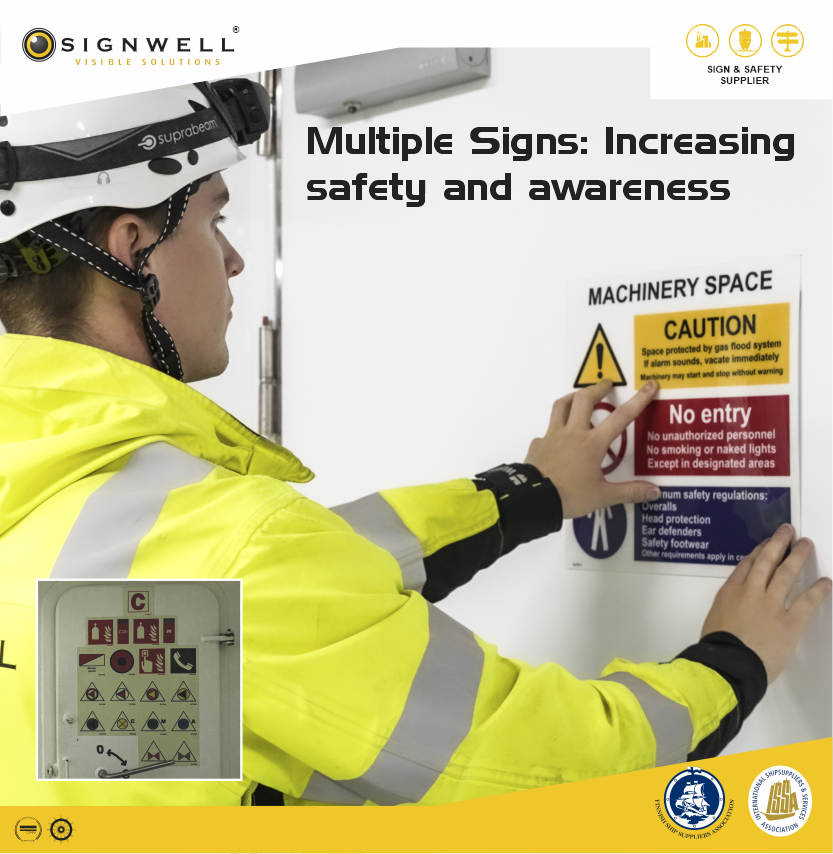
Installation errors frequently undermine even the best photoluminescent systems. Incorrect mounting heights, inadequate spacing between signs, and poor surface preparation can significantly reduce visibility and effectiveness. Many installations fail because installers don’t account for furniture, equipment, or structural elements that may obstruct sightlines during emergencies.
Inadequate maintenance represents another critical failure point. Photoluminescent materials require regular cleaning and inspection to maintain performance. Accumulated dirt, paint overspray, or damage from routine operations can drastically reduce light output. Many organisations implement these systems but fail to establish proper maintenance schedules.
Wrong material selection often occurs when cost considerations override performance requirements. Choosing standard-grade materials for demanding environments, or selecting inappropriate substrate materials that don’t match environmental conditions, leads to premature failure and compliance violations.
Insufficient luminance testing during installation and ongoing operations means systems may not meet required performance standards. Without proper measurement equipment and testing procedures, organisations cannot verify that their systems provide adequate guidance during emergencies.
Documentation and certification gaps create regulatory compliance issues. Many installations lack proper certification records, installation documentation, or maintenance logs required by maritime authorities and industrial safety inspectors.
Selecting the right photoluminescent signage system
Material selection forms the foundation of effective photoluminescent systems. PVC-free materials offer environmental and safety advantages, eliminating toxic gas emissions during fires while providing equivalent or superior performance. These materials also support sustainability goals while meeting stringent marine and industrial safety requirements.
Installation methods must match environmental conditions and maintenance capabilities. Adhesive-backed systems offer quick installation but may not withstand extreme conditions. Mechanical fastening provides superior durability but requires more complex installation procedures. Embedded systems offer maximum protection but involve higher initial costs.
Maintenance requirements vary significantly between system types. Self-cleaning surfaces reduce maintenance needs in dusty environments, while protective coatings extend service life in corrosive atmospheres. Consider your organisation’s maintenance capabilities and schedules when selecting system specifications.
Cost considerations should encompass total lifecycle expenses rather than initial purchase prices. Higher-quality materials with extended service lives often provide better value despite higher upfront costs. Factor in maintenance requirements, replacement schedules, and potential downtime costs for a comprehensive financial analysis.
Matching system capabilities to specific applications requires understanding both regulatory requirements and operational conditions. Passenger vessels need different solutions than cargo ships, while chemical processing facilities have different requirements than general manufacturing operations.
Proper photoluminescent signage systems provide reliable safety guidance when conventional systems fail. By understanding relevant standards, performance requirements, and selection criteria, you can implement systems that genuinely protect lives while meeting regulatory obligations. The investment in quality materials and proper installation pays dividends in safety performance and regulatory compliance throughout the system’s operational life.