Low Location Lighting: The Ultimate Buyer’s Guide
27.02.2026
When darkness strikes during a maritime emergency, traditional overhead lighting becomes useless if power fails or smoke fills the air. This critical gap in safety systems has led to the development of low location lighting systems that guide crew and passengers to safety at floor level, where visibility remains clearest during evacuations.
Modern maritime safety regulations demand robust evacuation guidance systems that function independently of main power sources. Understanding the different types of low location lighting available, their installation requirements, and long-term costs helps maritime operators make informed decisions that protect lives while meeting regulatory compliance.
This guide covers everything you need to know about selecting, installing, and maintaining low location lighting systems for your maritime operations.
What is low location lighting and why it is critical for maritime safety
Low location lighting systems, commonly referred to as 3L systems, provide emergency evacuation guidance at floor level rather than overhead. These systems create continuous illuminated pathways that remain visible even when smoke, steam, or power failures compromise traditional lighting.
Unlike standard emergency lighting that illuminates from above, low location lighting operates within 500 mm of the floor surface. This positioning proves crucial during emergencies because smoke rises, leaving the lower areas with better visibility for evacuation routes.
The International Maritime Organization (IMO) and SOLAS (Safety of Life at Sea) standards mandate these systems for passenger vessels and many commercial ships. IMO RESOLUTION A.752(18) specifically outlines performance requirements for low location lighting, including minimum luminance levels, installation specifications, and testing protocols.
These regulations exist because traditional emergency lighting often fails when needed most. Power outages, structural damage, or environmental conditions can render overhead systems ineffective, leaving evacuees without proper guidance to muster stations or lifeboats.
Photoluminescent vs LED low location lighting systems
Maritime operators can choose between two primary technologies: photoluminescent systems and LED-based solutions. Each offers distinct advantages depending on vessel requirements and operational conditions.
Photoluminescent systems such as our 3L-PL™ technology store ambient light energy and release it gradually during darkness. These systems require no electrical power, making them inherently reliable during power failures. Installation involves applying self-adhesive strips or panels to deck surfaces, requiring minimal structural modifications.
LED systems such as our 3L-EP™ technology provide consistent illumination through electrical power, offering brightness control and extended range capabilities. These systems can illuminate pathways of up to 1,000 metres continuously and integrate with vessel monitoring systems for real-time status updates.
Power requirements differ significantly between technologies. Photoluminescent systems need adequate ambient lighting for charging but consume no operational power. LED systems require dedicated electrical circuits with backup power sources, increasing installation complexity but ensuring consistent performance regardless of ambient conditions.
Maintenance considerations vary substantially. Photoluminescent systems typically require only periodic cleaning and visual inspection, while LED systems need regular electrical testing, component replacement, and battery maintenance for backup power supplies.
Key factors to consider when choosing low location lighting
Vessel type significantly influences system selection. Passenger ships with high ambient lighting levels suit photoluminescent systems well, while cargo vessels or offshore platforms with limited natural light may benefit from LED solutions.
Route conditions affect system performance requirements. Vessels operating in extreme weather or remote areas need systems with proven reliability and minimal maintenance requirements. Ships with regular port access can accommodate more complex systems requiring periodic servicing.
Power availability shapes technology choice. Vessels with robust electrical systems and backup power can support LED systems effectively. Ships with limited electrical capacity or unreliable power supplies often prefer photoluminescent solutions.
Installation constraints include deck space, surface materials, and structural considerations. Environmental factors such as temperature extremes, chemical exposure, and UV radiation affect material selection and system longevity.
Compliance requirements vary by vessel classification, operating region, and flag state regulations. Understanding specific regulatory obligations ensures system selection meets all applicable standards without over-specification.
Installation and compliance requirements for maritime 3L systems
Professional installation begins with detailed pathway planning, identifying primary and secondary evacuation routes from all areas to muster stations and lifeboat positions. Surface preparation ensures proper adhesion and longevity, particularly on steel decks subject to thermal expansion.
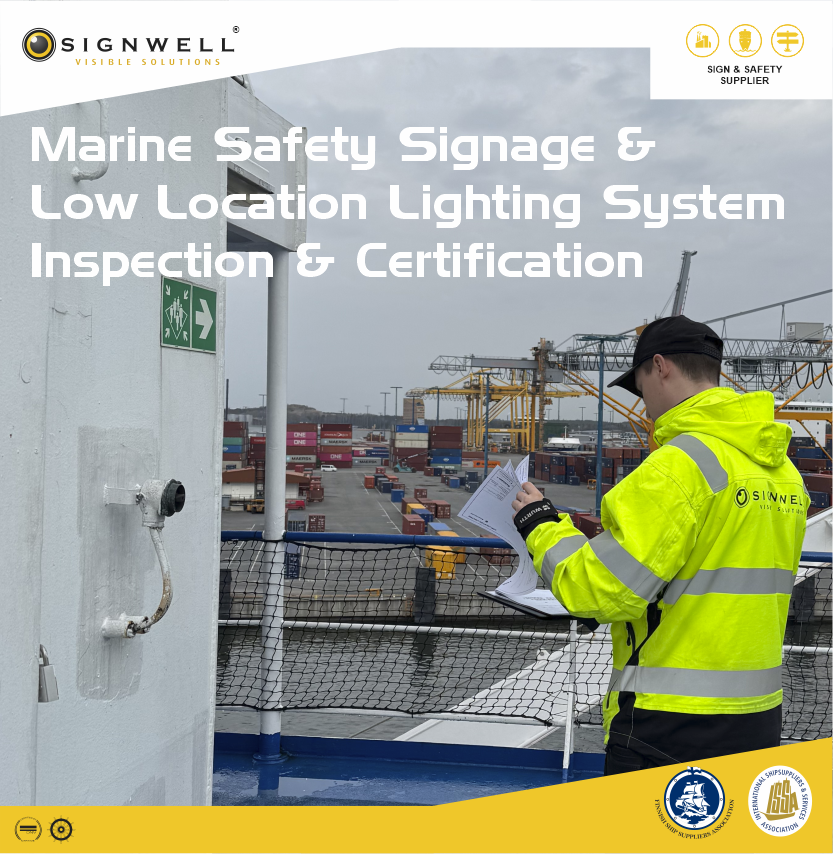
DNV certification requires comprehensive documentation throughout installation. Our DNV-certified inspectors perform 3L-SI™ inspections to verify compliance with IMO RESOLUTION A.752(18) standards, testing luminance levels, continuity, and durability.
Integration with existing safety systems involves coordination with general alarm systems, emergency lighting circuits, and fire detection networks. Proper integration ensures low location lighting activates appropriately during different emergency scenarios.
Testing protocols include initial commissioning tests, periodic performance verification, and documentation maintenance. Systems require regular inspection schedules aligned with vessel safety management systems and flag state requirements.
Compliance documentation must demonstrate adherence to applicable standards, including installation certificates, performance test results, and maintenance records. This documentation is essential during port state inspections and insurance surveys.
Cost analysis and ROI of low location lighting investments
Initial investment costs vary significantly between system types. Photoluminescent systems typically require lower upfront costs due to simpler installation requirements and no electrical infrastructure needs. LED systems involve higher initial expenses but offer consistent performance characteristics.
Operational savings emerge through reduced maintenance requirements and improved system reliability. Photoluminescent systems offer minimal ongoing costs beyond periodic inspection, while LED systems require regular electrical maintenance and component replacement.
Insurance benefits may include reduced premiums for vessels with comprehensive safety systems exceeding minimum regulatory requirements. Some insurers recognise advanced evacuation guidance systems as risk reduction measures.
Regulatory compliance value extends beyond avoiding penalties. Systems meeting current standards often accommodate future regulatory changes more easily, reducing upgrade costs and operational disruptions.
Long-term performance economics favour systems with proven durability and minimal maintenance requirements. Quality systems operating reliably for decades provide a superior return on investment compared with cheaper alternatives requiring frequent replacement or repair.
Choosing the right low location lighting system requires balancing immediate costs against long-term operational benefits. We provide comprehensive consultation services to help maritime operators select optimal solutions for their specific requirements, ensuring both regulatory compliance and operational efficiency. Contact our team to discuss your low location lighting needs and explore how our proven systems can enhance your vessel’s safety capabilities.