Is Your IMO Sign System Meeting Current Standards?
16.02.2026
Maritime safety regulations continue to evolve, and your vessel’s IMO sign system might not keep pace with these changes. Outdated signage can lead to serious compliance issues during inspections, potentially resulting in costly delays and safety violations. Understanding current standards and identifying gaps in your existing systems is crucial for maintaining operational compliance and crew safety.
We will explore the latest regulatory requirements, common deficiencies in older installations, and practical steps for ensuring your signage meets today’s stringent standards. With over 30 years of experience in maritime safety solutions, we have witnessed firsthand how proper signage systems can make the difference between smooth inspections and regulatory headaches.
Current IMO signage standards and regulatory changes
The latest IMO Resolution A.752(18) has introduced significant updates that directly impact vessel signage requirements. These changes focus primarily on enhanced visibility standards, material specifications, and photoluminescent performance criteria that exceed previous requirements.
Recent SOLAS regulation updates have strengthened requirements for emergency evacuation signage, particularly regarding durability and visibility in low-light conditions. Vessels operating internationally must now comply with more stringent photoluminescent standards that ensure signs remain visible for extended periods without external power sources.
These regulatory changes particularly affect older vessels and offshore installations where existing IMO sign systems may not meet current photoluminescent intensity requirements. The new standards demand signs that maintain visibility for longer periods and perform reliably in extreme maritime conditions, including temperature ranges from −40°C to 150°C.
Material composition requirements have also evolved, with increased emphasis on halogen-free and environmentally sustainable materials. Modern regulations prioritise signs that reduce toxic emissions during fires whilst maintaining superior performance characteristics.
Critical compliance gaps in outdated IMO sign systems
Older signage installations frequently exhibit material degradation that compromises both visibility and regulatory compliance. Photoluminescent materials lose effectiveness over time, particularly when exposed to constant UV radiation and harsh maritime conditions, leading to insufficient luminance during emergency situations.
Common deficiencies include fading or discoloured signs that no longer meet minimum brightness requirements, damaged mounting systems that create safety hazards, and obsolete symbol designs that do not align with current international standards. These issues often become apparent only during formal inspections, creating unexpected compliance challenges.
Many legacy systems utilise materials containing halogens or other substances now considered environmentally harmful. Beyond environmental concerns, these materials may produce toxic fumes during fires, directly contradicting modern safety principles and regulatory requirements.
Inadequate documentation represents another significant gap. Older installations often lack proper certification records, maintenance logs, or compliance verification documents that inspectors now require. Without comprehensive documentation, even functional signage systems may fail compliance assessments.
How modern IMO signs outperform legacy systems
New-generation IMO signs deliver performance that exceeds standard requirements by up to four times, providing substantial safety margins that ensure long-term compliance. These advanced systems utilise halogen-free materials that eliminate toxic emission risks whilst offering superior durability and visibility characteristics.
Modern photoluminescent technology maintains consistent brightness levels throughout extended operational periods. Unlike older systems that gradually lose effectiveness, contemporary signs provide reliable performance for over 150,000 hours of service life, significantly reducing replacement frequency and maintenance costs.
Enhanced material engineering enables modern signs to withstand extreme conditions without performance degradation. UV-resistant formulations prevent fading and discolouration, whilst advanced adhesive systems maintain secure mounting even in high-vibration maritime environments.
Environmental sustainability represents a key advantage of modern systems. New-generation signs are 100% recyclable, supporting corporate environmental objectives whilst meeting increasingly strict regulatory requirements for sustainable maritime operations.
Installation efficiency has improved dramatically with lightweight designs that reduce installation time and labour costs. Modern mounting systems provide secure attachment with simplified procedures, enabling faster vessel turnaround times during retrofitting projects.
Essential steps for IMO sign system assessment
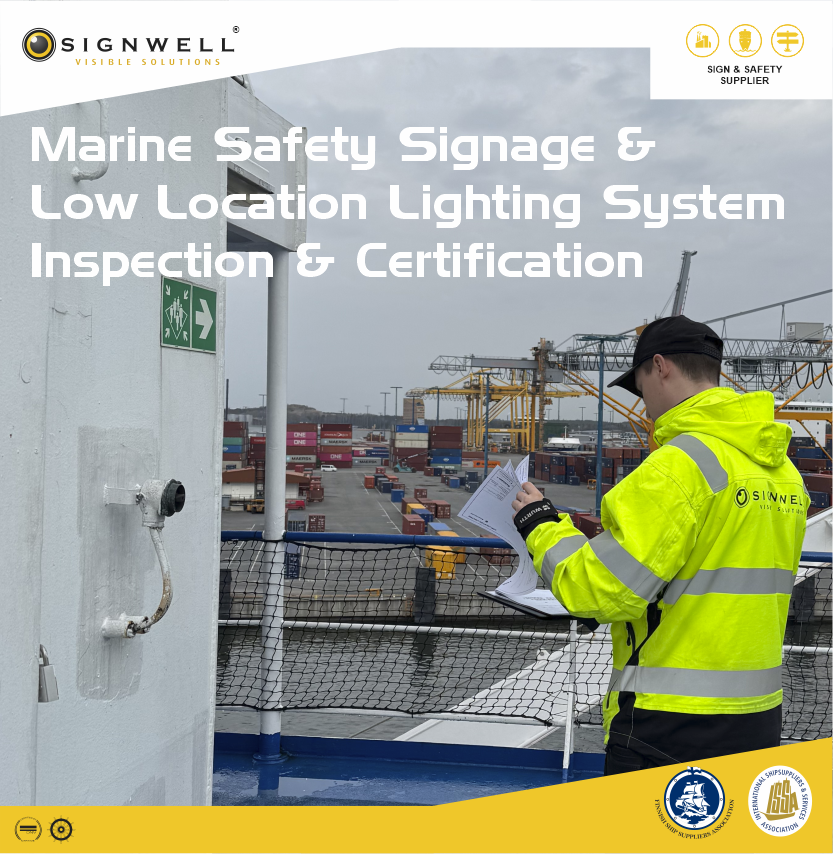
Conducting thorough evaluations begins with systematic visual inspections of all signage throughout the vessel or offshore installation. Document the condition of each sign, noting any visible damage, fading, or mounting issues that could affect performance or compliance.
Photoluminescent testing requires measuring actual brightness levels using calibrated equipment to verify compliance with current standards. Signs that fail to meet minimum luminance requirements require immediate replacement, regardless of their apparent visual condition.
Review all documentation associated with your existing signage system, including installation certificates, maintenance records, and previous inspection reports. Gaps in documentation can create compliance issues even when physical signs meet current standards.
Evaluate mounting systems for structural integrity and proper installation techniques. Loose or damaged mounting hardware creates safety hazards and may indicate broader system maintenance issues requiring attention.
Consider engaging certified inspectors who specialise in maritime safety systems for comprehensive assessments. Professional evaluations provide objective compliance verification and detailed recommendations for addressing any identified deficiencies.
Create a prioritised upgrade plan based on assessment findings, focusing first on safety-critical areas and signs showing the most significant compliance gaps. This approach ensures efficient resource allocation whilst maintaining continuous regulatory compliance.
Ensuring your IMO sign system meets current standards requires proactive assessment and timely upgrades when deficiencies are identified. Modern signage technology offers substantial performance improvements over legacy systems, providing enhanced safety, environmental benefits, and long-term compliance assurance. Regular evaluations and professional guidance help maintain optimal system performance whilst avoiding costly inspection failures.