How to start implementing IMO signage on vessels?
2.01.2026
Implementing IMO signage on vessels requires a systematic approach that begins with understanding mandatory requirements and conducting thorough compliance assessments. The process involves selecting appropriate signage systems, creating detailed implementation plans, and addressing common installation challenges. Success depends on proper planning, crew coordination, and adherence to international maritime safety standards throughout the installation process.
What are IMO signage requirements and why are they mandatory for vessels?
IMO signage requirements stem from the International Maritime Organization’s SOLAS (Safety of Life at Sea) Convention, which mandates specific safety marking systems for all commercial vessels. These regulations require clear evacuation route markings, emergency equipment identification, and hazard warnings to ensure crew and passenger safety during both normal operations and emergency situations.
The SOLAS Convention Chapters II-2 and III establish comprehensive requirements for emergency escape route signs and safety equipment markings. All passenger vessels, cargo ships over 500 gross tonnes, and offshore installations must comply with these standards. The regulations specify sign placement, visibility requirements, and performance standards for different vessel types.
IMO Resolution A.752(18) provides detailed technical specifications for photoluminescent evacuation systems, including charging light levels, afterglow brightness, and durability requirements. These standards ensure that every IMO sign maintains visibility for at least 60 minutes after a power failure, providing crucial guidance during emergencies when traditional lighting systems may fail.
Compliance verification occurs during mandatory safety inspections, when port state control officers assess signage systems against international standards. Non-compliance can result in vessel detention, operational delays, and significant financial penalties, making proper implementation essential for maintaining operational certificates.
How do you assess your vessel’s current signage compliance status?
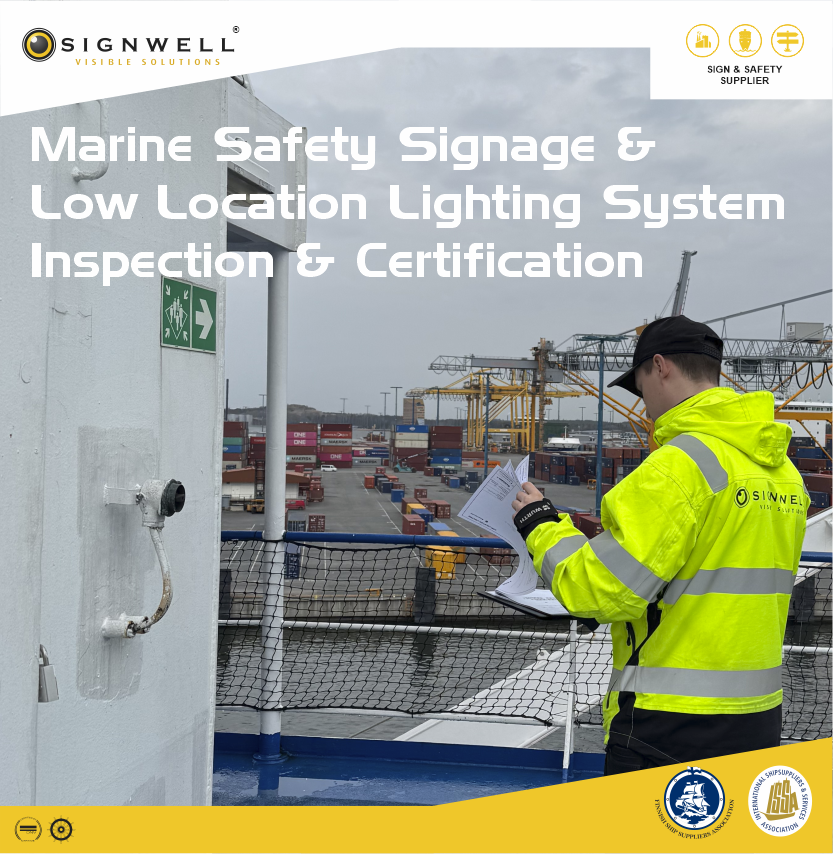
Conducting a comprehensive signage audit begins with mapping all existing safety markings against current IMO standards and SOLAS requirements. This systematic review identifies gaps in coverage, outdated signs, and areas requiring immediate attention before official inspections.
Start by documenting every evacuation route, emergency equipment location, and hazard area throughout the vessel. Compare current signage against IMO Resolution A.752(18) requirements, checking for proper placement, visibility, and condition. Pay particular attention to sign spacing, which should not exceed 10 metres along escape routes, and ensure adequate charging light coverage for photoluminescent systems.
Examine sign condition carefully, looking for fading, damage, or deterioration that could compromise visibility during emergencies. Photoluminescent signs require specific charging light levels to function properly, so verify that existing lighting systems provide adequate illumination in accordance with ISO 15370:2021 standards.
Create a detailed compliance report documenting deficiencies, prioritising critical safety areas such as muster stations, lifeboat locations, and primary escape routes. This assessment forms the foundation for your implementation plan and helps estimate the required materials, timeline, and budget for achieving full compliance.
What’s the difference between photoluminescent and electric IMO signage systems?
Photoluminescent systems absorb ambient light and provide emergency guidance without electrical power, while electric systems use LED technology to maintain continuous illumination. Both meet IMO requirements but offer different advantages depending on vessel configuration and operational needs.
Photoluminescent IMO signs charge from normal vessel lighting and glow for hours after a power failure, making them ideal for areas with consistent ambient lighting. These systems require no electrical connections, reducing installation complexity and maintenance requirements. However, they depend on adequate charging light levels and may not perform optimally in areas with limited illumination.
Electric LED systems provide consistent brightness regardless of ambient lighting conditions and can extend continuously for long distances without interruption. They are particularly effective in cargo holds, engine rooms, and other areas where charging light may be insufficient for photoluminescent systems.
Installation requirements differ significantly between systems. Photoluminescent signs need proper substrate preparation and adequate charging light coverage, while electric systems require cable routing, power supply connections, and backup battery systems. Electric systems typically involve higher initial costs but may be necessary in specific vessel areas to ensure reliable emergency guidance.
How do you create an effective IMO signage implementation plan?
Developing a structured implementation approach requires careful timeline planning, budget allocation, and crew coordination to minimise operational disruption while ensuring comprehensive compliance. The plan should prioritise critical safety areas and establish clear milestones for tracking progress.
Begin by prioritising installation areas based on safety criticality and accessibility during normal operations. Focus on muster stations, primary escape routes, and lifeboat areas during the initial phase, then progress to secondary routes and equipment locations. This approach ensures that essential safety systems are operational quickly while allowing flexibility for remaining installations.
Coordinate installation scheduling with vessel operations, maintenance periods, and port calls to maximise efficiency. Dry-dock periods offer ideal opportunities for comprehensive installations, while routine port calls can accommodate smaller sections without disrupting cargo operations or passenger services.
Budget planning should account for materials, installation labour, inspection costs, and potential operational delays. Include contingency allowances for unexpected complications such as structural modifications or additional charging light requirements. Establish clear communication protocols with crew members to ensure safety during installation and proper system maintenance after completion.
What are the most common IMO signage installation challenges and solutions?
Space constraints and structural obstacles represent the most frequent installation challenges, particularly in engine rooms, cargo areas, and retrofit situations where existing equipment limits optimal sign placement. Environmental factors such as temperature extremes, humidity, and vibration also affect system performance and longevity.
Limited installation space often requires creative solutions such as custom-sized signs, alternative mounting methods, or strategic placement adjustments while maintaining compliance with spacing requirements. Work with experienced installers who understand IMO standards and can recommend compliant alternatives when standard placements are not feasible.
Material compatibility issues arise when existing surfaces do not provide adequate adhesion or when chemical exposure affects sign performance. Surface preparation becomes critical in these situations, often requiring primer applications, mechanical cleaning, or alternative mounting systems to ensure reliable adhesion.
Crew training challenges emerge when personnel are not familiar with new signage systems or maintenance requirements. Develop comprehensive training programmes covering system operation, maintenance procedures, and inspection requirements. This ensures proper long-term performance and compliance with ongoing certification requirements.
Environmental factors such as extreme temperatures, salt exposure, and UV radiation can compromise sign performance over time. Select materials specifically rated for marine environments and follow manufacturer recommendations for surface preparation, installation techniques, and maintenance schedules to maximise system lifespan and reliability.
Looking for IMO-compliant signage for your vessel? Explore Signwell’s IMO signs and find suitable safety signage for maritime environments.
This content was generated with the help of AI and it may contain mistakes