How Low Location Lighting Saves Lives in Emergencies
9.03.2026
When disaster strikes and smoke fills a building or vessel, traditional overhead emergency lighting often becomes invisible through the haze. People panic, lose their bearings, and precious seconds tick away. This is where low location lighting transforms emergency evacuations from chaotic scrambles into organised, life-saving procedures.
Unlike conventional ceiling-mounted systems, low location lighting creates a clear pathway at floor level, where visibility remains optimal even in smoke-filled environments. This technology has revolutionised safety protocols across maritime and industrial sectors, providing reliable guidance when people need it most.
We will explore why traditional emergency lighting falls short, how low location systems work, the key differences between photoluminescent and LED technologies, real-world applications, and the regulatory standards that drive these innovations.
Why traditional emergency lighting fails during critical evacuations
Conventional emergency lighting systems face three critical vulnerabilities that compromise their effectiveness during actual emergencies. Power dependency represents the most obvious weakness. When fires damage electrical systems or power cuts occur, battery-backed emergency lights often fail within hours, leaving evacuees in complete darkness.
Visibility limitations present an even more serious challenge. Overhead lighting becomes practically useless when smoke accumulates near the ceiling, which happens rapidly in most fire scenarios. The light simply cannot penetrate the dense smoke layer, creating a false sense of illumination while actually providing no useful guidance.
Maintenance challenges compound these issues. Traditional emergency lighting systems require regular testing, battery replacements, and bulb changes. In maritime environments, salt corrosion accelerates component failure. Industrial settings expose fixtures to chemicals, vibrations, and extreme temperatures that compromise reliability precisely when the system needs to function flawlessly.
Human behaviour during emergencies also reveals flaws in overhead lighting design. People naturally look down when navigating unfamiliar or dangerous environments, especially when visibility is compromised. Ceiling-mounted lights fail to accommodate this instinctive behaviour, leading to disorientation and slower evacuation times.
How low location lighting guides people to safety
Low location lighting works on a simple but brilliant principle: position the light source where people can actually see it during an emergency. By placing lighting elements at floor level or just above, these systems remain visible even when smoke obscures everything above eye level.
The science behind smoke behaviour supports this approach. Hot gases and smoke rise naturally, creating a relatively clear layer near the floor. This phenomenon, known as smoke stratification, means that low location lighting continues to provide guidance when overhead systems become completely ineffective.
These systems create continuous pathways that lead directly to exits and safety equipment. Rather than relying on people to interpret scattered light sources, low location lighting forms unbroken lines that guide evacuees step by step. The psychological impact is significant, as people feel more confident following a clear, illuminated path rather than searching for distant exit signs through smoke and darkness.
The positioning also accommodates natural human behaviour during stress. When visibility is compromised, people instinctively crouch down and look towards the floor for guidance. Low location lighting systems work with these natural tendencies rather than against them, making evacuations more intuitive and efficient.
Photoluminescent vs LED emergency lighting systems
Two main technologies power modern low location lighting systems, each with distinct advantages for different applications. Our 3L-PL™ photoluminescent system stores light energy during normal conditions and releases it gradually during emergencies. This technology requires no electrical power, making it completely immune to power failures and electrical damage.
Photoluminescent systems excel in reliability and maintenance simplicity. They contain no moving parts, batteries, or electrical components that can fail. The materials can withstand extreme temperatures and harsh environments while providing consistent performance for years. Installation is straightforward, as no electrical connections are required.
Our 3L-EP™ LED system offers different advantages, particularly for longer evacuation routes. LED emergency lighting provides consistent brightness levels and can illuminate pathways of up to 1000 metres continuously. The electrical power supply allows for integration with building management systems and remote monitoring capabilities.
LED systems perform exceptionally well in applications requiring immediate full brightness or where ambient light levels are insufficient to charge photoluminescent materials adequately. They also offer greater flexibility in programming different lighting patterns or intensities based on specific emergency scenarios.
The choice between technologies depends on specific application requirements, maintenance capabilities, and environmental conditions. Many installations benefit from hybrid approaches that combine both technologies for maximum reliability and coverage.
Real-world applications saving lives in maritime and industrial settings
Maritime environments present unique challenges that showcase the effectiveness of low location lighting systems. Ships and offshore platforms deal with narrow corridors, complex layouts, and the constant risk of power failures during emergencies. Traditional lighting systems often prove inadequate in these confined spaces, where smoke can quickly obscure visibility.
Low location lighting transforms ship evacuations by creating clear pathways from accommodation areas to muster stations and lifeboats. The systems remain functional even when the vessel lists or loses power, maintaining guidance when crew and passengers need it most. The robust construction withstands the harsh marine environment, including salt spray, vibrations, and temperature fluctuations.
Industrial facilities benefit similarly from low location lighting installations. Chemical plants, refineries, and manufacturing facilities face unique risks where conventional emergency lighting may be damaged by explosions, chemical exposure, or extreme temperatures. The floor-level positioning protects the lighting elements while ensuring continued functionality.
Offshore platforms represent perhaps the most demanding application for emergency lighting systems. These installations combine maritime challenges with industrial hazards, often in remote locations where emergency response is limited. Low location lighting provides reliable guidance through complex platform layouts, helping personnel reach lifeboats and evacuation points efficiently.
The measurable improvements in evacuation times and safety outcomes have made low location lighting standard practice in many high-risk industries. The technology proves particularly valuable in environments where traditional lighting infrastructure is vulnerable to the same hazards that trigger evacuations.
Meeting international safety standards with modern lighting solutions
International maritime regulations drive much of the innovation in emergency lighting technology. The International Maritime Organization (IMO) and SOLAS conventions establish minimum requirements for evacuation lighting systems, but modern low location lighting systems often exceed these standards significantly.
Our systems comply with multiple international standards, including ISO 15370:2021 for low location lighting and IMO Resolution A.752(18) for emergency escape route signs and equipment location markings. These regulations recognise the superior performance of floor-level lighting systems compared with traditional approaches.
The regulatory landscape continues to evolve as authorities recognise the life-saving potential of advanced lighting technologies. Modern lighting solutions not only meet current requirements but also anticipate future regulatory developments by incorporating enhanced safety features and performance capabilities.
Compliance extends beyond basic functionality to include environmental considerations. Our systems use PVC-free and halogen-free materials that meet increasingly strict environmental regulations while maintaining superior performance characteristics. The 100% recyclable materials support sustainability goals without compromising safety.
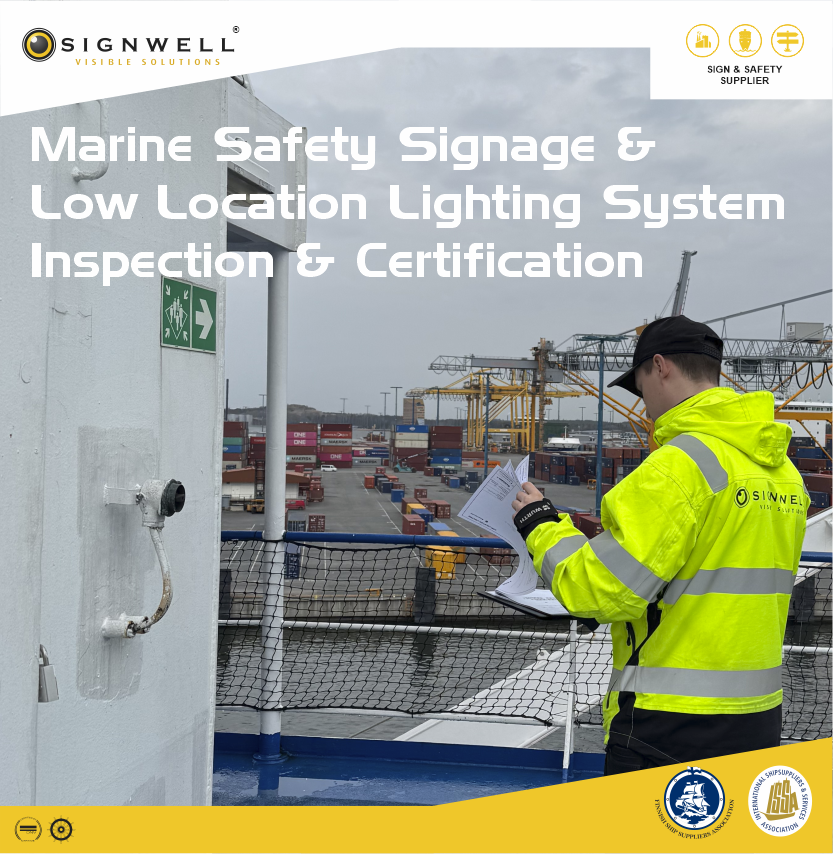
DNV certification and regular inspections ensure ongoing compliance and performance optimisation. Our 3L-SI™ inspection services help facilities maintain regulatory compliance while maximising the safety benefits of their low location lighting installations.
Low location lighting represents a fundamental shift from hoping emergency lighting works to ensuring it guides people to safety when they need it most. The technology addresses the real-world challenges of emergency evacuations while exceeding international safety standards and providing measurable improvements in evacuation outcomes.