How does IMO signage improve maritime safety?
10.12.2025
IMO signage improves maritime safety by creating a standardised visual communication system that transcends language barriers, enabling crew members and passengers from different countries to understand critical safety information instantly. These internationally recognised signs guide people to emergency equipment, escape routes, and assembly points during emergencies, whilst warning them of hazards throughout the vessel. Proper IMO signage ensures consistent safety communication across all vessels, reducing confusion during critical situations and helping save lives when every second matters.
What is IMO signage and why is it required on ships?
IMO signage refers to standardised safety signs mandated by the International Maritime Organization for use on ships and offshore installations. These signs follow specific design standards that ensure uniform safety communication across all vessels worldwide, regardless of the crew’s nationality or spoken language. The regulatory foundation comes from SOLAS (Safety of Life at Sea) conventions, which require all commercial vessels, passenger ships, cargo vessels over certain tonnages, and offshore platforms to display compliant safety signage.
The universal visual language created by IMO signage eliminates communication barriers that could prove fatal during emergencies. When crew members from different countries work together on international vessels, they need to understand safety information without translation delays. IMO signage achieves this through standardised symbols, colours, and pictograms that convey critical information at a glance. A Filipino crew member, a Norwegian officer, and a Chinese passenger can all instantly recognise the same fire extinguisher symbol or emergency exit sign.
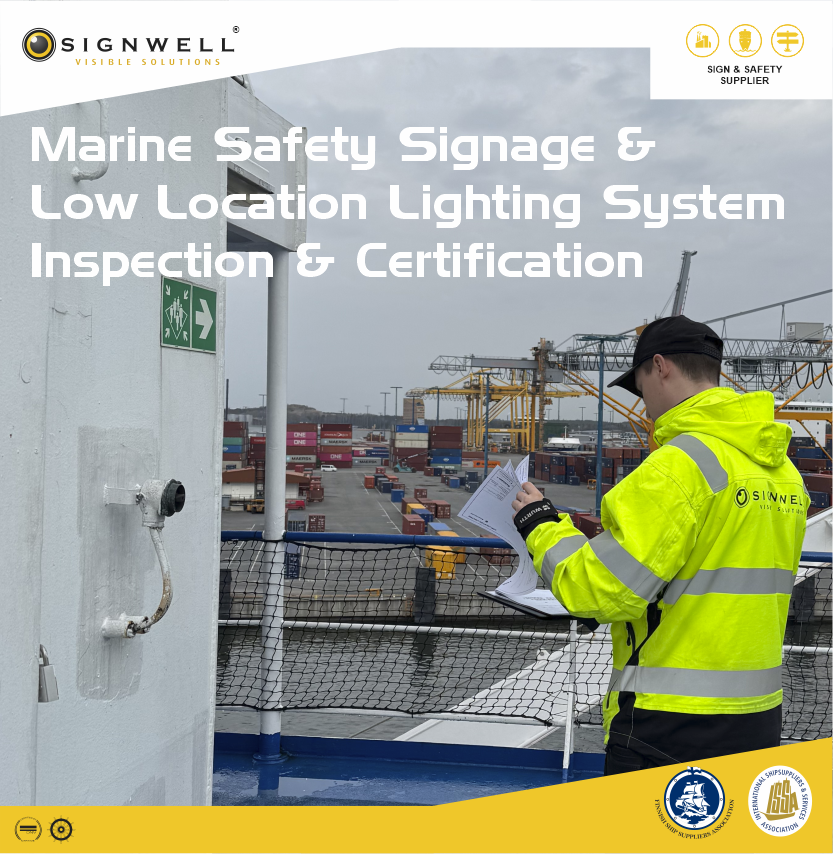
Compliance with IMO signage standards isn’t optional for vessels engaged in international trade. Port state control authorities regularly inspect ships to verify proper safety signage installation. Vessels that fail to meet these requirements face detentions, fines, and sailing restrictions until compliance is achieved.
How does IMO signage help during maritime emergencies?
During maritime emergencies such as fires, flooding, or evacuation scenarios, IMO signage provides essential guidance when panic and confusion threaten survival. The signs function as a continuous navigation system that directs people towards safety, showing escape routes, emergency equipment locations, and assembly points. In low-visibility conditions caused by smoke, power failures, or darkness, photoluminescent and illuminated signage systems remain visible when conventional lighting fails.
Low Location Lighting (LLL) systems represent a critical advancement in emergency guidance technology. These systems install lighting or photoluminescent strips at floor level along escape routes, providing continuous visual guidance even when smoke obscures ceiling-mounted signs. When fire fills a corridor with thick smoke, people instinctively move towards the floor where air quality is better. LLL systems meet them there, creating an illuminated path to safety that remains visible below the smoke layer.
The standardised colours and symbols enable rapid recognition and decision-making under extreme stress. During emergencies, cognitive function deteriorates as adrenaline increases and panic sets in. Simple, universally recognised symbols require minimal mental processing, allowing people to make correct decisions about which direction to move, where to find life-saving equipment, and which areas to avoid. This immediate comprehension can reduce evacuation times significantly, directly impacting survival rates during serious maritime incidents.
What are the different types of IMO safety signs used on vessels?
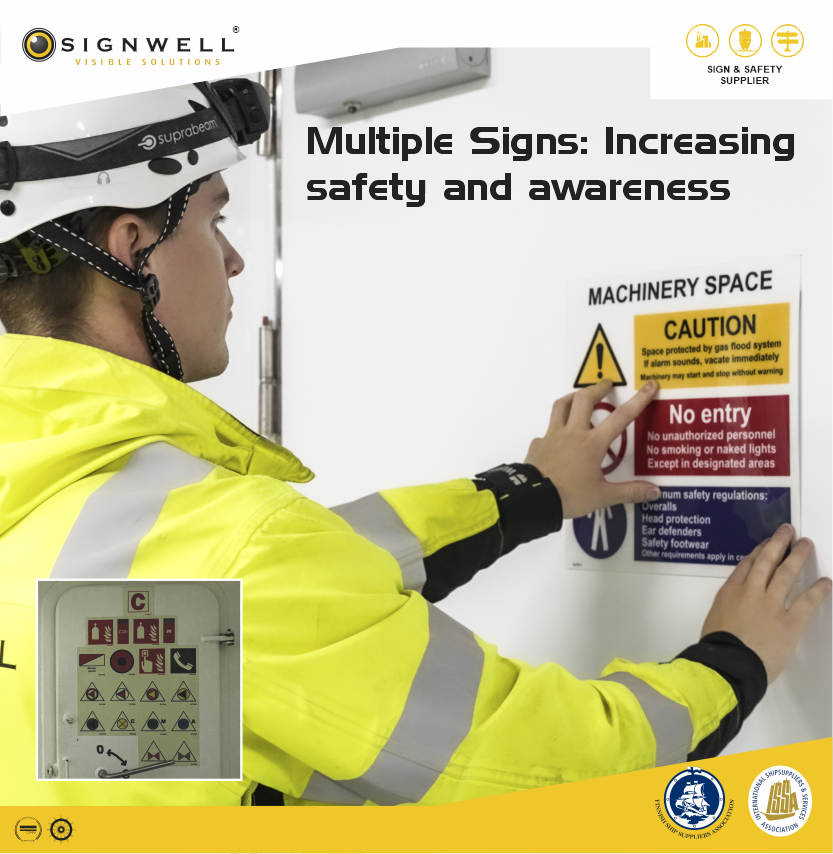
IMO safety signage comprises five main categories that work together to create a comprehensive safety communication system. Prohibition signs use red circular symbols with diagonal lines to indicate forbidden actions such as no smoking, no open flames, or no entry to unauthorised personnel. These prevent behaviours that could trigger accidents or interfere with safety operations.
Mandatory action signs appear in blue circles and instruct people to take specific safety measures such as wearing lifejackets, using handrails, or wearing protective equipment. Warning signs use yellow triangles to alert people to hazards including slippery surfaces, overhead dangers, hot surfaces, or electrical risks. These signs help people navigate the vessel safely during normal operations.
Emergency equipment signs mark the locations of fire extinguishers, fire hoses, lifeboat stations, life rings, and first aid kits. These use specific colour coding: red for fire-fighting equipment and green for emergency exits and first aid. Escape route signs, also in green, indicate emergency exits, escape routes, and assembly points where people should gather during evacuations.
The colour coding system creates intuitive associations: red signals fire equipment and prohibitions, yellow warns of hazards, green indicates safety and escape routes, and blue mandates specific actions. This consistent colour language allows people to categorise information quickly, even from a distance or in stressful situations. When properly implemented throughout a vessel, these signs create a complete safety communication network that guides both crew and passengers through normal operations and emergency situations.
How do modern IMO signs differ from traditional maritime safety signage?
Modern IMO-compliant signage represents significant advancement over traditional maritime safety signs in materials, visibility, and durability. New generation IMO signs utilise PVC-free and halogen-free construction that prevents toxic fume release during fires. Traditional signs often contained materials that, when exposed to flames, released dangerous gases that could incapacitate or kill people attempting to evacuate. The material improvements in modern signage eliminate this additional hazard.
Enhanced photoluminescent technology in contemporary IMO signage provides substantially longer-lasting and brighter illumination compared to traditional painted or basic reflective signs. Modern photoluminescent materials charge more efficiently from ambient light and maintain visibility for extended periods after light sources fail. This technology ensures that escape route markings remain visible throughout lengthy evacuation procedures, even when all power systems have failed.
Durability improvements allow modern signs to withstand extreme maritime conditions that would quickly degrade traditional signage. Contemporary IMO signs resist saltwater corrosion, UV radiation damage, and temperature fluctuations from -40°C to +150°C whilst maintaining visibility and structural integrity. Traditional painted signs faded, peeled, and corroded relatively quickly in harsh marine environments, requiring frequent replacement and creating periods when safety information was unclear or missing.
Despite these performance enhancements, modern IMO signs are actually lighter and easier to install than traditional maritime safety signage. We manufacture signs that exceed standard requirements by substantial margins whilst reducing installation time and labour costs. The combination of superior performance, enhanced safety characteristics, and practical installation advantages makes modern IMO signage a clear improvement over older maritime safety marking systems.
What happens if a vessel doesn’t have proper IMO signage?
Vessels without proper IMO signage face serious regulatory consequences when inspected by port state control authorities. Inspectors specifically check for compliant safety signage during routine examinations, and deficiencies result in detentions that prevent the vessel from sailing until corrections are made. These detentions create costly delays, contract violations, and reputational damage. Operators may also face substantial fines for non-compliance with SOLAS and IMO regulations.
The safety risks of inadequate signage extend far beyond regulatory penalties. During emergencies, missing or non-compliant signs lead to increased evacuation times, confusion about escape routes, and difficulty locating emergency equipment. People waste precious seconds searching for exits or fire extinguishers that should be immediately identifiable. This confusion directly contributes to higher injury rates and potentially loss of life during serious maritime incidents.
Insurance and liability implications compound the regulatory and safety concerns. When accidents occur on vessels lacking proper IMO signage, insurers may dispute claims or reduce settlements based on non-compliance with international safety standards. Operators face increased liability exposure if investigations reveal that inadequate safety signage contributed to injuries or fatalities. The legal and financial consequences of non-compliance can far exceed the relatively modest investment required for proper signage systems.
Certification bodies like DNV verify IMO signage compliance during vessel inspections and surveys as part of their classification processes. These inspections assess whether signs meet material standards, visibility requirements, placement specifications, and maintenance conditions. Vessels that fail these inspections must address deficiencies before receiving or maintaining their safety certifications, which are essential for commercial operation and insurance coverage.