How do you use IMO signs properly?
26.12.2025
Using IMO signs properly involves understanding their purpose, placing them strategically for maximum visibility, selecting appropriate materials for marine environments, and maintaining them in accordance with maritime safety regulations. Proper implementation ensures compliance with SOLAS requirements and creates effective safety communication systems that guide crew and passengers during normal operations and emergency situations.
What are IMO signs and why are they mandatory on ships?
IMO signs are standardised safety symbols mandated by the International Maritime Organization under the SOLAS (Safety of Life at Sea) convention. These universal pictographic signs communicate critical safety information without language barriers, ensuring consistent emergency response procedures across international waters regardless of crew nationality or passenger origin.
The mandatory nature of IMO signs stems from their essential role in maritime safety management. Ships operate in international waters with multinational crews and passengers who may not share common languages. During emergencies, clear visual communication becomes vital for survival. IMO signs eliminate confusion by providing instantly recognisable symbols that indicate escape routes, safety equipment locations, prohibited actions, and mandatory procedures.
SOLAS regulations require specific IMO sign categories aboard vessels: escape route signs showing emergency exits and assembly points, fire safety equipment signs marking extinguishers and alarm systems, prohibition signs indicating dangerous areas or forbidden actions, and mandatory action signs directing required safety behaviours. Each category serves distinct safety functions that collectively create comprehensive visual safety communication systems.
Where should IMO signs be placed on a vessel for maximum effectiveness?
IMO signs must be positioned at eye level between 1.5 and 2 metres in height, with clear sightlines and adequate illumination to ensure visibility during normal and emergency lighting conditions. Strategic placement considers human behaviour patterns, traffic flow, and sightlines to maximise recognition and response effectiveness.
Escape route signs require continuous visual guidance from any location to safety areas. Place directional arrows at decision points, corridor intersections, and stairwell entrances. Assembly station signs need prominent positioning at muster points with clear visibility from multiple approach angles. Emergency exit signs must be visible from maximum required distances, typically 50 metres for main routes.
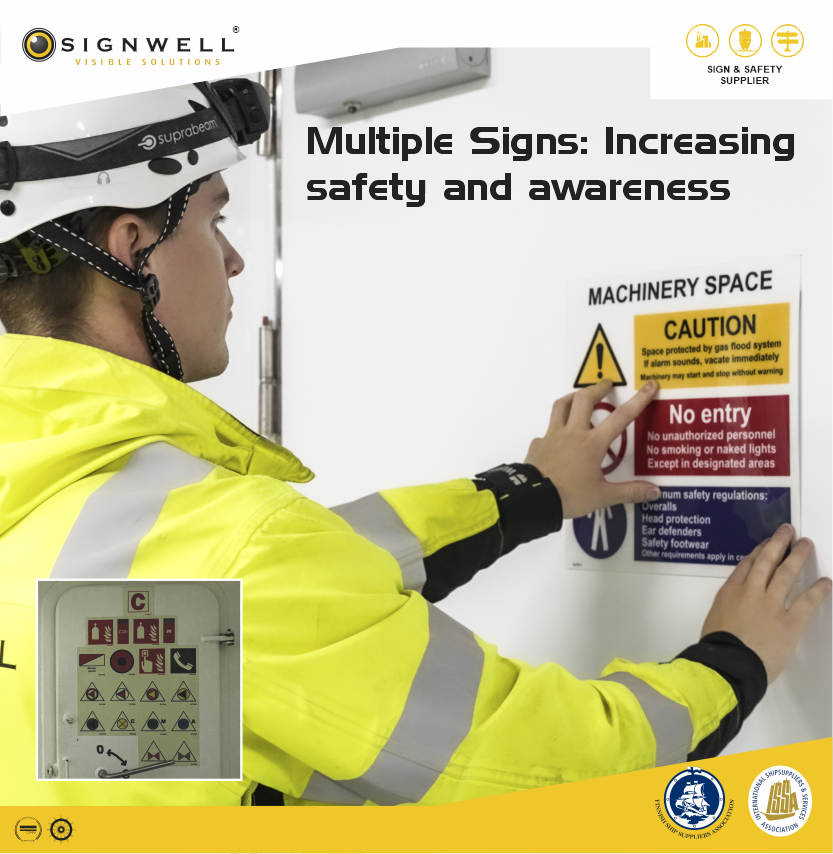
Fire safety equipment signs should be mounted directly above or adjacent to equipment locations, ensuring visibility does not become obstructed by normal operations or equipment positioning. Prohibition signs require placement at entry points to restricted areas, with additional positioning where violations commonly occur. Consider viewing angles, lighting conditions, and potential obstructions when determining exact mounting locations.
How do you choose the right IMO sign materials for marine environments?
Marine environment IMO signs require materials with photoluminescent properties, UV resistance, and corrosion protection to maintain visibility and durability in harsh saltwater conditions, temperature extremes, and constant moisture exposure. Material selection directly impacts long-term compliance and safety effectiveness.
Photoluminescent materials provide emergency visibility when electrical lighting fails. Quality photoluminescent signs charge from ambient light and glow for hours in darkness, which is crucial during power failures or emergency situations. UV stability prevents colour fading and material degradation from constant sunlight exposure, particularly important for exterior mounting locations.
Weather resistance encompasses saltwater corrosion protection, temperature stability from freezing to extreme heat, and moisture barrier properties. PVC-based materials offer excellent marine durability, while aluminium substrates provide structural strength for larger signs. Adhesive systems must maintain bonding strength despite temperature cycling and moisture exposure. Consider operating temperature ranges, expected service life, and maintenance accessibility when selecting materials.
What are the most common mistakes when installing IMO signs?
Common installation errors include improper mounting heights, inadequate lighting considerations, and poor surface preparation that compromise visibility and regulatory compliance. These mistakes reduce safety effectiveness and may result in inspection failures or emergency response problems.
Height placement errors occur when signs are mounted too high or too low for optimal visibility. Signs placed above 2.5 metres become difficult to read, while those below 1.2 metres may be obstructed by equipment or people. Inadequate lighting assessment leads to signs being placed in shadowed areas or locations where emergency lighting does not provide sufficient illumination.
Surface preparation mistakes include mounting on contaminated, curved, or unsuitable surfaces that prevent proper adhesion. Poor material choices, such as using interior-grade signs in exterior locations, lead to premature failure. Orientation errors, particularly with directional signs, create confusion rather than guidance. Always verify mounting surface compatibility, lighting adequacy, and viewing angles before final installation.
How do you maintain and inspect IMO signs for continued compliance?
IMO sign maintenance requires monthly visual inspections, quarterly cleaning protocols, and annual compliance assessments to ensure continued visibility, adhesion, and regulatory conformance throughout their service life. Systematic maintenance prevents gradual degradation that compromises safety effectiveness.
Monthly inspections should verify sign visibility, mounting security, and photoluminescent charging capability. Check for physical damage, colour fading, adhesion failure, or obstruction by equipment or modifications. Quarterly cleaning removes salt deposits, dirt, and contamination that reduce visibility or photoluminescent performance. Use appropriate cleaning agents that will not damage sign materials or photoluminescent properties.
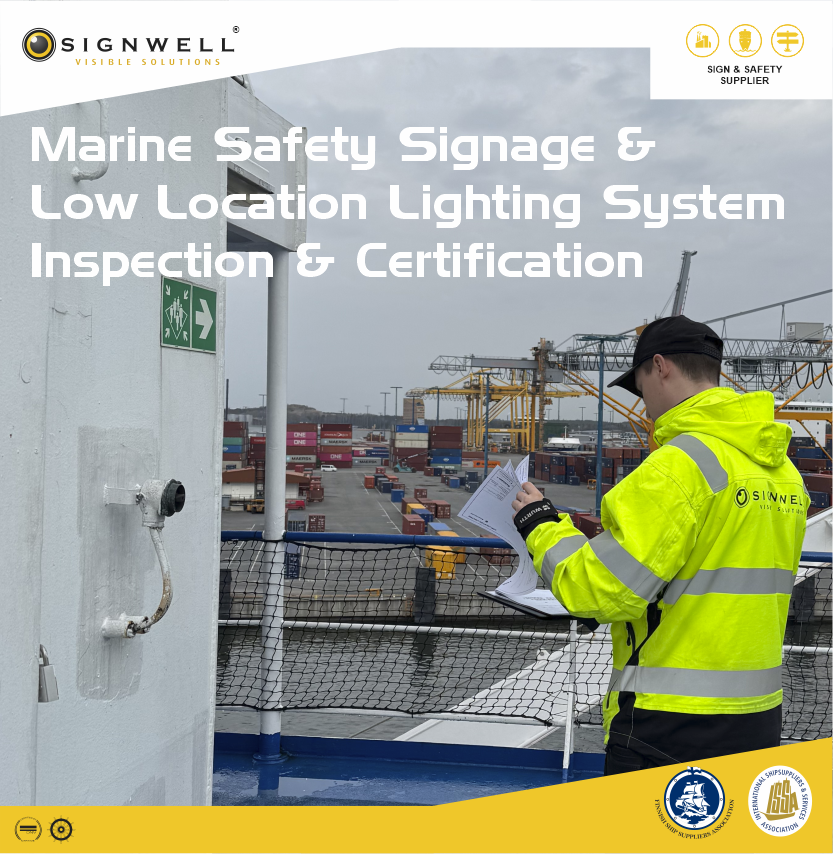
Annual assessments evaluate overall system compliance, sign positioning effectiveness, and replacement requirements. Document inspection findings and maintenance actions for regulatory compliance records. Replace signs showing significant fading, damage, or adhesion failure immediately. Establish replacement schedules based on manufacturer recommendations and observed performance in your specific operating environment.
Proper IMO sign implementation requires attention to regulatory requirements, strategic placement, appropriate materials, correct installation, and ongoing maintenance. These elements work together to create effective safety communication systems that protect lives and ensure maritime safety compliance. Regular assessment and proactive maintenance ensure your IMO sign system continues to provide reliable safety guidance throughout its service life.