How do you budget for IMO safety sign compliance across a large fleet in 2026?
4.07.2026
Budgeting for IMO safety sign compliance across a large fleet in 2026 requires planning for vessel size, sign count, material standards, and inspection cycles, with typical per-vessel costs ranging from a few thousand euros for minor refreshes to significantly more for full SOLAS-compliant refits. The scale of your fleet multiplies every variable, so a structured, vessel-by-vessel approach is far more accurate than applying a flat per-ship estimate. The sections below break down each cost driver and planning question fleet managers are asking right now.
What factors drive the cost of IMO safety sign compliance across a fleet?
The main cost drivers for IMO safety sign compliance across a fleet are vessel size and complexity, the number and type of signs required, material specification, installation labour, and whether vessels need full replacement or targeted updates. Regulatory changes, such as updated IMO resolutions or flag state requirements, can also trigger unexpected spend across multiple vessels simultaneously.
Material quality has a significant impact on long-term budget. Signs manufactured from PVC-free and halogen-free materials, which meet or exceed current photoluminescence performance standards, carry a higher upfront cost but require less frequent replacement. When you multiply that difference across a fleet of ten, twenty, or fifty vessels, the lifetime cost gap between premium and budget materials becomes substantial.
Labour and logistics are often underestimated. For vessels in active service, sign installation must be scheduled around port calls, which adds coordination costs. For vessels in drydock, installation can be batched efficiently, reducing per-sign labour costs considerably. Fleet managers who plan compliance work around scheduled maintenance windows consistently report lower total costs than those who address compliance reactively.
How do you calculate the number of IMO signs required per vessel?
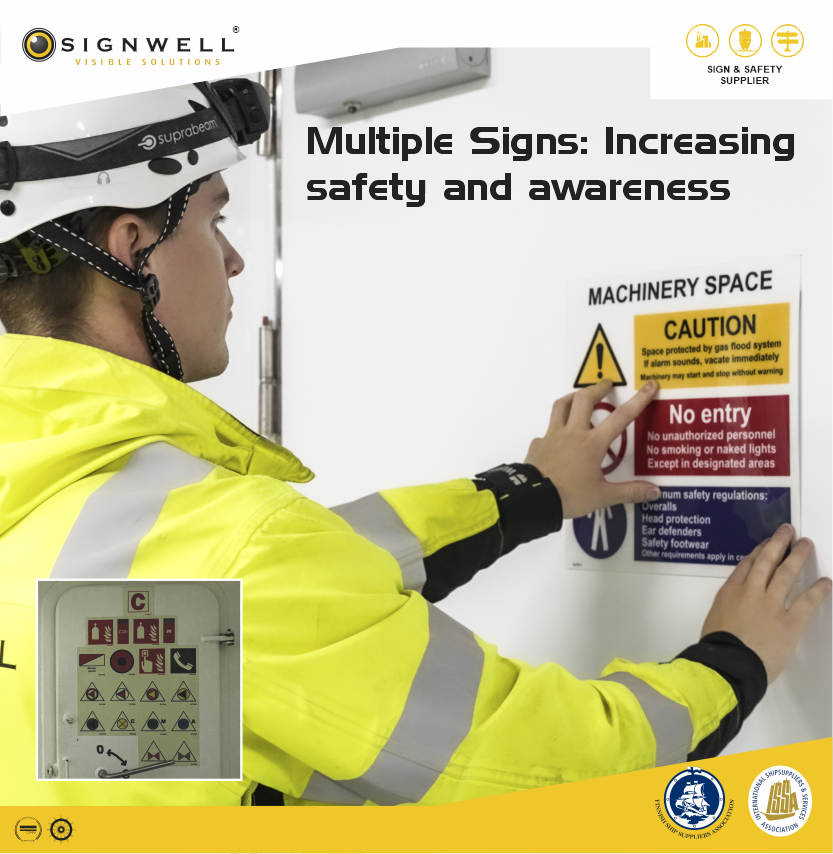
The number of IMO signs required per vessel is determined by the vessel’s size, layout, number of decks, muster stations, lifesaving appliance positions, fire equipment locations, and the applicable SOLAS chapter requirements. A standard cargo vessel may require several hundred signs, while a large passenger ship can require thousands across evacuation routes, firefighting equipment, and safety instruction boards.
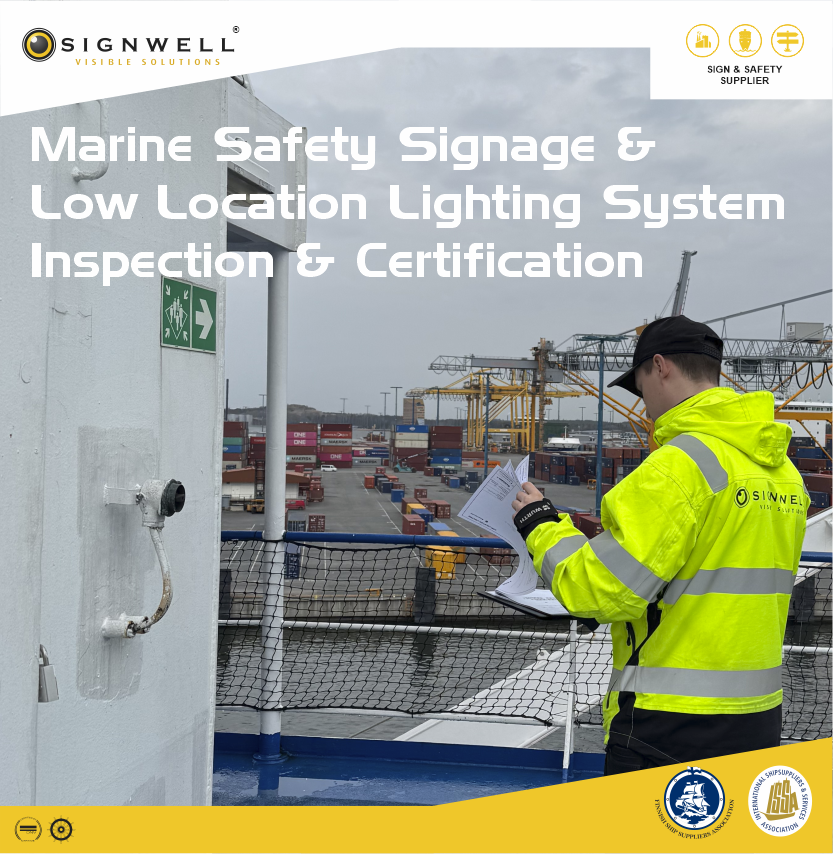
The most reliable starting point is a systematic sign survey conducted deck by deck and compartment by compartment. This survey maps every required sign position against IMO Resolution A.952(23) and the relevant SOLAS chapters, identifies existing signs that are faded, damaged, or non-compliant with current standards, and produces a clear replacement and new-installation list.
For fleet-wide budgeting, running a detailed survey on two or three representative vessels, grouped by vessel class, gives you a reliable multiplier to apply across the rest of the fleet. Vessels of the same class and build year tend to have very similar sign counts, so this sampling approach produces accurate fleet-level estimates without surveying every hull individually before budgeting begins.
What is the difference between budgeting for new builds and retrofit compliance?
New build IMO sign compliance is budgeted as part of the outfitting specification at the design stage, where sign positions are planned into the vessel layout and installation is integrated with other fit-out work. Retrofit compliance on existing vessels involves surveying current sign status, removing non-compliant signs, and installing replacements around an active operational schedule, which typically makes it more expensive per sign than new build installation.
New build budgeting
For new builds, sign specifications are agreed with the shipyard during the design phase. This allows procurement to be consolidated, materials to be ordered in bulk, and installation to be carried out efficiently alongside other outfitting work. The key budget risk in new builds is scope changes late in the build process, which can require additional signs or repositioning of planned ones. Building a contingency of around ten to fifteen percent into the sign budget at the outset covers most of these variations.
Retrofit budgeting
Retrofit compliance budgets must account for survey costs, removal of existing non-compliant signs, surface preparation where needed, and installation labour that competes with other drydock or port-call work. The condition of existing signs matters: a vessel where signs were last replaced with substandard materials may need near-complete replacement, while a vessel with quality photoluminescent signs installed within the last decade may only need targeted updates. A pre-budget survey is essential for retrofit projects because assumptions without survey data routinely lead to significant cost overruns.
How can fleet managers reduce IMO compliance costs without cutting corners?
Fleet managers can meaningfully reduce IMO safety sign compliance costs by consolidating procurement across the fleet, aligning compliance work with scheduled drydock intervals, choosing durable materials that extend replacement cycles, and working with a single supplier capable of delivering standardised solutions across all vessel classes. None of these approaches compromise compliance quality.
Bulk procurement is one of the most straightforward savings levers available. Ordering signs for multiple vessels in a single production run reduces unit costs and simplifies logistics. Suppliers who can manufacture to your fleet’s specific layout requirements and deliver consolidated shipments to a single yard or port reduce both cost and coordination effort significantly.
Investing in higher-specification signs also reduces long-term cost. Signs that exceed standard photoluminescence performance requirements, resist UV degradation, and tolerate temperature extremes from below freezing to well above one hundred degrees Celsius simply need replacing less often. Over a ten-year horizon, the total cost of ownership for premium signs is frequently lower than for budget alternatives that require replacement every few years.
We offer turnkey compliance packages that cover survey, supply, installation, and post-installation inspection, which removes the coordination overhead that inflates costs when fleet managers are managing multiple separate contractors for the same project.
What compliance risks increase costs if IMO sign budgets are underestimated?
Underestimating the IMO sign compliance budget creates several risks that each carry their own costs: port state control detentions, flag state deficiency notices, failed class surveys, and emergency procurement at premium prices when deficiencies must be corrected before a vessel can sail. Any one of these outcomes typically costs far more than the original budget shortfall.
Port state control inspections are the most immediate financial risk. An inspector who identifies non-compliant, missing, or deteriorated safety signs can issue a deficiency notice that delays departure until the issue is resolved. Emergency sign procurement and installation in a foreign port, outside your normal supplier relationship, is consistently more expensive than planned procurement, and the vessel’s off-hire costs during the delay can dwarf the sign costs entirely.
There is also a reputational and contractual risk for fleet operators working under time-charter agreements. Charter parties increasingly include clauses that allow charterers to claim damages for delays caused by preventable compliance failures. A safety sign budget shortfall that leads to a detention is no longer just an operational inconvenience; it can become a contractual liability.
When should a fleet schedule its IMO sign compliance review for 2026?
Fleet managers should schedule their IMO sign compliance review for 2026 in the first quarter of the year, aligning it with planned drydock schedules and annual safety management system audits. Starting the review early gives enough lead time for surveys, procurement, and installation to be completed before vessels reach their next class renewal or flag state inspection.
The practical planning sequence looks like this:
- Identify which vessels have drydock or scheduled maintenance windows in 2026
- Commission sign surveys on those vessels ahead of the maintenance window
- Consolidate survey findings into a fleet-level procurement specification
- Issue procurement and confirm delivery lead times against the maintenance schedule
- Schedule installation and post-installation inspection as part of the drydock scope
For vessels not entering drydock in 2026, a desk-based review of existing sign records and last replacement dates will identify any units approaching end of service life that may need attention before the next scheduled maintenance period. Building this annual review into your safety management system calendar ensures that IMO sign compliance never becomes a reactive, costly emergency.
Planning your fleet’s IMO safety sign compliance for 2026? Explore Signwell’s IMO signs to find SOLAS-compliant marine safety signage suited to your vessel requirements.
This content was generated with the help of AI and it may contain mistakes