How do fire safety zones affect IMO safety sign selection and placement?
19.09.2026
Fire safety zones directly determine which IMO safety signs are required, where they must be placed, and what materials they must be made from. On a vessel, each zone carries its own risk profile under SOLAS regulations, and those risk profiles drive specific sign selection and positioning rules. The sections below unpack each layer of that relationship, from how zones are defined to when your signage should be reviewed.
How are fire safety zones defined on a vessel?
Fire safety zones on a vessel are defined by SOLAS Chapter II-2, which divides ship spaces into categories based on fire risk, occupancy type, and the materials or activities present. Each space is assigned a fire zone boundary that limits how fire and smoke can spread, and these boundaries form the structural basis for all fire safety planning, including IMO sign placement decisions.
In practical terms, zones are separated by fire-rated divisions, typically A-class or B-class bulkheads and decks, which are designed to contain fire for a defined period. Machinery spaces, accommodation areas, cargo holds, and service spaces all fall into different zone categories because their fire loads and evacuation requirements differ significantly. A machinery space housing high-pressure fuel systems presents a fundamentally different risk than a passenger cabin corridor, and the signage strategy must reflect that distinction.
The zone layout is documented in the vessel’s fire control plan, which must be posted and accessible at all times. This plan is the primary reference document for anyone selecting or positioning marine safety signage, because it shows exactly where zone boundaries fall and which spaces belong to which category.
Which IMO sign categories apply to fire safety zones?
Within fire safety zones, the relevant IMO sign categories are fire-fighting equipment signs, escape route and evacuation signs, and prohibition or warning signs specific to fire hazards. The exact combination required in any given zone depends on the zone’s classification, the equipment installed there, and the routes that pass through or terminate at that space.
Fire-fighting equipment signs, standardised under IMO Resolution A.952(23) and related SOLAS requirements, must identify every piece of fixed and portable fire-fighting apparatus, including extinguishers, hose reels, fire damper controls, and CO2 system release points. In high-risk zones such as engine rooms and pump rooms, the density of these signs is considerably higher than in low-risk accommodation spaces.
Escape route signs guide crew and passengers toward muster stations and lifeboat embarkation areas, and they must be present in every space that forms part of an escape route, regardless of zone classification. Warning signs indicating fire hazards, flammable materials, or restricted access due to fire risk complete the picture. Together, these categories ensure that anyone in a fire safety zone can immediately identify both the hazard and the correct response.
How does zone classification change sign placement rules?
Zone classification changes sign placement rules by setting minimum visibility distances, mounting heights, and sign density requirements based on the expected conditions in that space. High-risk zones with the potential for smoke accumulation, reduced visibility, or rapid fire development require signs to be positioned lower, spaced more closely, and supplemented with additional directional indicators compared to lower-risk areas.
In spaces classified as high fire-risk, such as engine rooms or paint lockers, IMO safety signs must be positioned so they remain visible even when smoke is present at higher levels. This typically means mounting escape route signs at or below 1.5 metres from the deck, ensuring that a person crawling low can still follow the evacuation path. Supplementary directional arrows must be placed at intervals short enough that the next sign is always visible from the previous one.
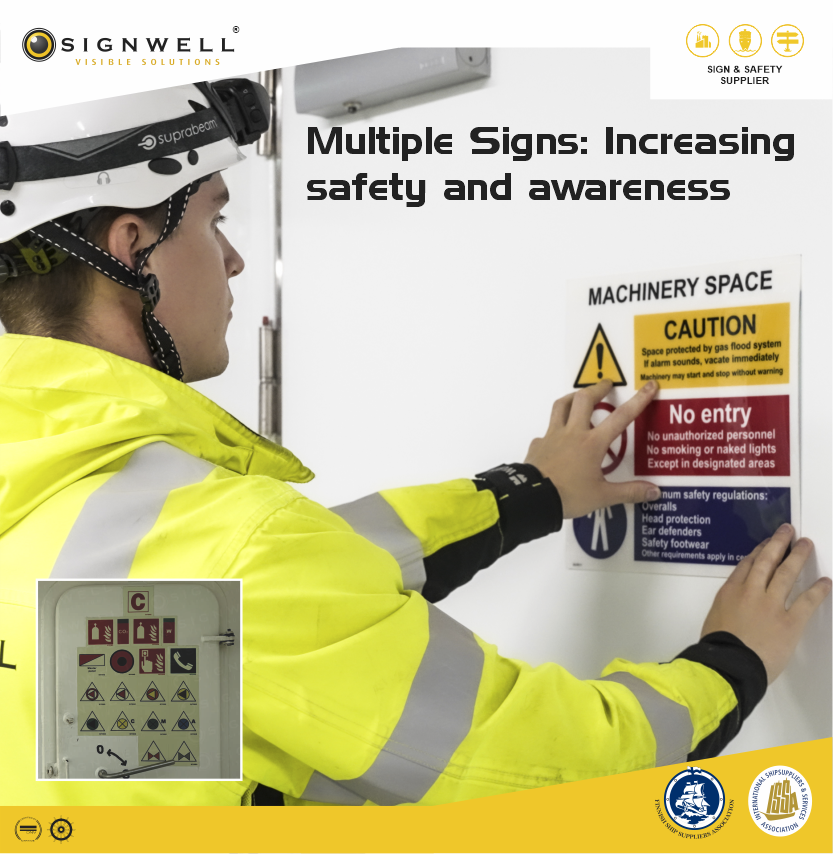
In accommodation zones with lower fire risk, standard mounting heights and spacing intervals apply, but signs must still be positioned at decision points, such as corridor junctions, stairwell entries, and cabin exits, so that occupants never have to guess which direction to move. Zone boundaries themselves should also be marked, since crew members need to know when they are crossing from one fire zone into another, particularly during emergency response.
What materials must IMO signs use in high-temperature fire zones?
IMO signs used in high-temperature fire zones must be made from materials that maintain structural integrity, legibility, and photoluminescent performance when exposed to elevated temperatures. Standard photoluminescent films on plastic substrates are not sufficient for spaces where temperatures can spike rapidly. Signs in these zones typically require rigid, heat-resistant substrates capable of withstanding temperatures well above standard operating ranges without warping, discolouring, or losing adhesion.
Our New Generation IMO signs are manufactured from PVC-free and halogen-free materials, which is particularly relevant in fire zone applications. Halogen-containing materials release toxic gases when burned, creating an additional hazard in exactly the spaces where occupants are most vulnerable. Eliminating halogens from sign materials is therefore not just an environmental consideration but a direct fire safety one.
For the most demanding high-temperature environments, signs must be tested and certified to confirm they retain their safety function under the thermal conditions specific to that space. Premium-grade signs designed for industrial and marine applications can perform across a temperature range from well below freezing to above 150 degrees Celsius, making them suitable for the thermal extremes found in machinery spaces and areas adjacent to boilers or exhaust systems.
How do Low Location Lighting systems integrate with fire zone layouts?
Low Location Lighting systems integrate with fire zone layouts by following the same zone boundary logic used for IMO safety signs, ensuring that escape path illumination is continuous across all zones and does not terminate at a zone boundary where visibility conditions may change. The lighting system must guide occupants from any point within a fire zone to the nearest exit, regardless of whether smoke or power loss has compromised overhead lighting.
Photoluminescent systems such as the 3L-PL™ work by absorbing ambient light and re-emitting it during darkness or smoke conditions. Because they require no electrical power, they function even when a fire has caused total power failure, which is precisely the scenario most likely in a severe fire zone incident. Their placement along the lower portion of escape route corridors ensures visibility at the level where evacuating occupants are most likely to be moving.
Electrically powered systems such as the 3L-EP™ LED solution provide active illumination over distances up to 1,000 metres without interruption, making them particularly suited to large vessels or complex zone layouts where a photoluminescent system alone may not provide sufficient brightness in deep interior spaces. In practice, the choice between photoluminescent and electric systems, or a combination of both, is informed directly by the fire zone classification and the escape route distances involved.
When should fire zone signage be reviewed or updated?
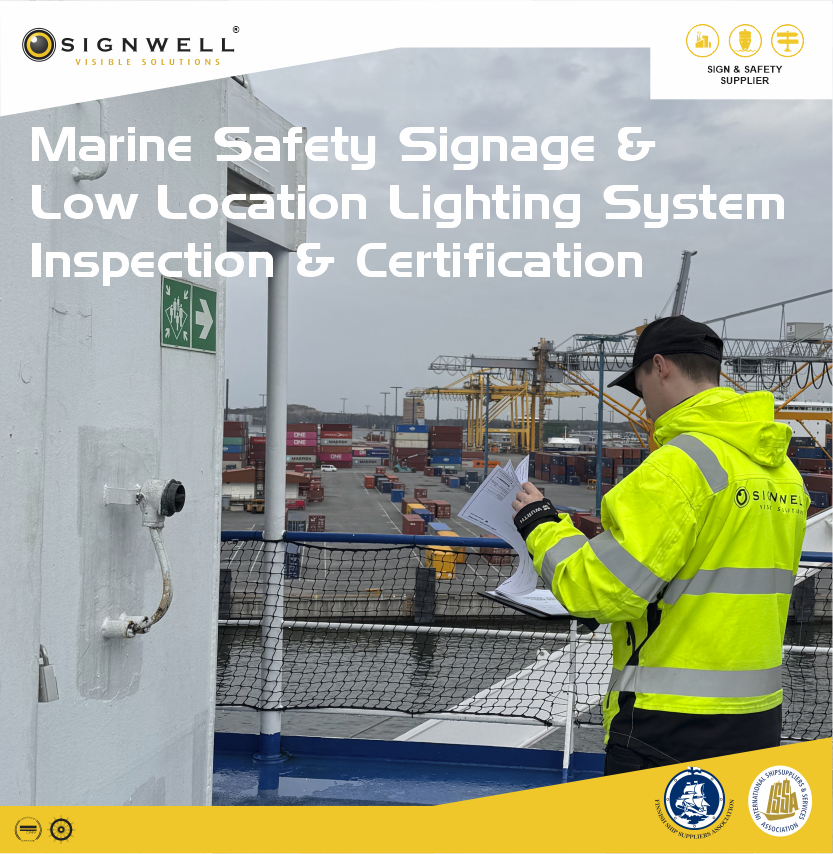
Fire zone signage should be reviewed whenever the vessel undergoes a structural modification, a change in use of a space, a refit that alters fire zone boundaries, or a scheduled safety audit. Beyond these event-driven triggers, SOLAS requires that fire control plans and associated safety equipment, including signage, are kept current and accurate at all times, which in practice means an annual review is a baseline expectation.
Any modification that changes the layout of a fire zone, even a relatively minor one such as relocating a fire damper or altering a bulkhead opening, can invalidate the existing sign placement. A sign that correctly indicated an escape route before the modification may now point toward a dead end or a space with a different risk classification. This is why sign reviews must be tied directly to the vessel’s change management process, not treated as a separate maintenance task.
Regulatory updates also trigger review obligations. IMO and SOLAS requirements evolve, and vessels operating internationally must ensure their fire zone signage reflects current standards. Surveys by classification societies such as DNV provide a formal checkpoint, but proactive reviews between surveys are strongly advisable, particularly for older vessels where original signage may no longer meet current material or photoluminescent performance standards. Scheduling a review before a major survey, rather than discovering deficiencies during one, keeps projects on schedule and avoids costly last-minute replacements.
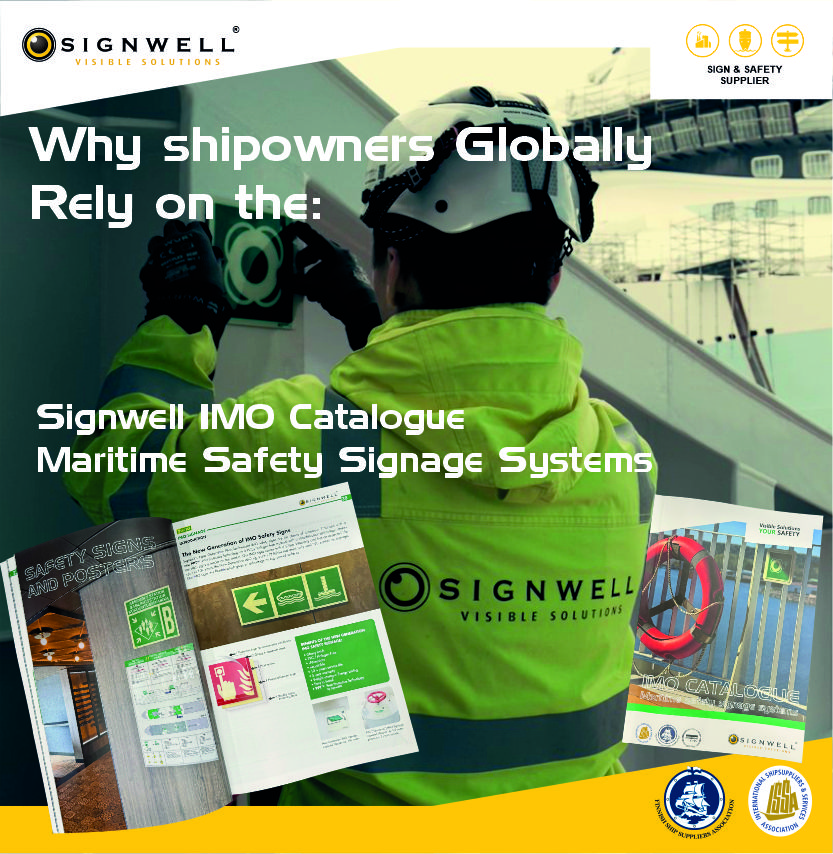
For vessels that need to ensure full compliance across all fire zones, exploring Signwell’s IMO safety signs is a practical next step toward meeting SOLAS requirements for sign selection, materials, and placement.
This content was generated with the help of AI and it may contain mistakes