7 Critical IMO Sign Requirements You Can’t Ignore
25.02.2026
Maritime safety regulations can make or break your vessel operations. When port state control inspectors board your ship, they are looking for specific IMO sign requirements that many operators overlook until it is too late. Non-compliance does not just mean paperwork headaches; it can result in costly detentions, operational delays, and serious safety risks for your crew.
Every commercial vessel must meet stringent International Maritime Organization standards for safety signage. These requirements cover everything from the type of materials used to precise placement specifications and documentation protocols. Understanding these critical requirements helps you maintain compliance, protect your crew, and avoid the significant costs associated with regulatory violations.
We will explore the seven essential areas of IMO sign compliance that every maritime professional needs to master, from mandatory classifications to material specifications and the consequences of getting it wrong.
Understanding mandatory IMO sign classifications
IMO signs fall into four primary categories, each serving distinct safety functions aboard vessels. Fire safety signs indicate fire equipment locations, escape routes, and fire-fighting procedures. These bright red signs with white symbols guide crew members to extinguishers, fire stations, and emergency exits during critical situations.
Life-saving equipment signs use green backgrounds with white pictograms to mark lifeboat stations, lifejacket storage, and muster points. These signs become crucial during abandon-ship procedures when crew visibility may be compromised by smoke or darkness.
Prohibition signs feature red circles with diagonal lines, clearly indicating which actions are forbidden in specific areas. Common examples include no smoking signs near fuel storage or no entry signs for restricted machinery spaces.
Mandatory action signs use blue backgrounds with white symbols to show required safety behaviours. These might indicate areas where hard hats, safety harnesses, or hearing protection must be worn. Each classification follows specific colour-coding and symbol standards that ensure universal recognition regardless of crew nationality or language barriers.
SOLAS compliance standards for maritime signage
The Safety of Life at Sea Convention establishes comprehensive requirements for vessel signage through specific chapters addressing different safety aspects. Chapter II-2 covers fire protection and detection systems, mandating clear marking of fire equipment and escape routes throughout the vessel.
Chapter III focuses on life-saving appliances and arrangements, requiring proper identification of muster stations, lifeboat positions, and emergency equipment locations. These regulations specify minimum sign sizes, visibility distances, and photoluminescent properties for low-light conditions.
SOLAS mandates that all safety signs remain visible from normal walking positions and maintain legibility at specified distances. Signs must be positioned at eye level where possible, with minimum heights of 1.5 metres from deck level in most areas. Material specifications require signs to withstand marine environments while maintaining their visibility and adhesion properties.
The convention also establishes requirements for multilingual signage in areas where international crew members work. This ensures that safety information remains accessible to all personnel regardless of their primary language, reducing response times during emergencies.
Critical placement and visibility requirements
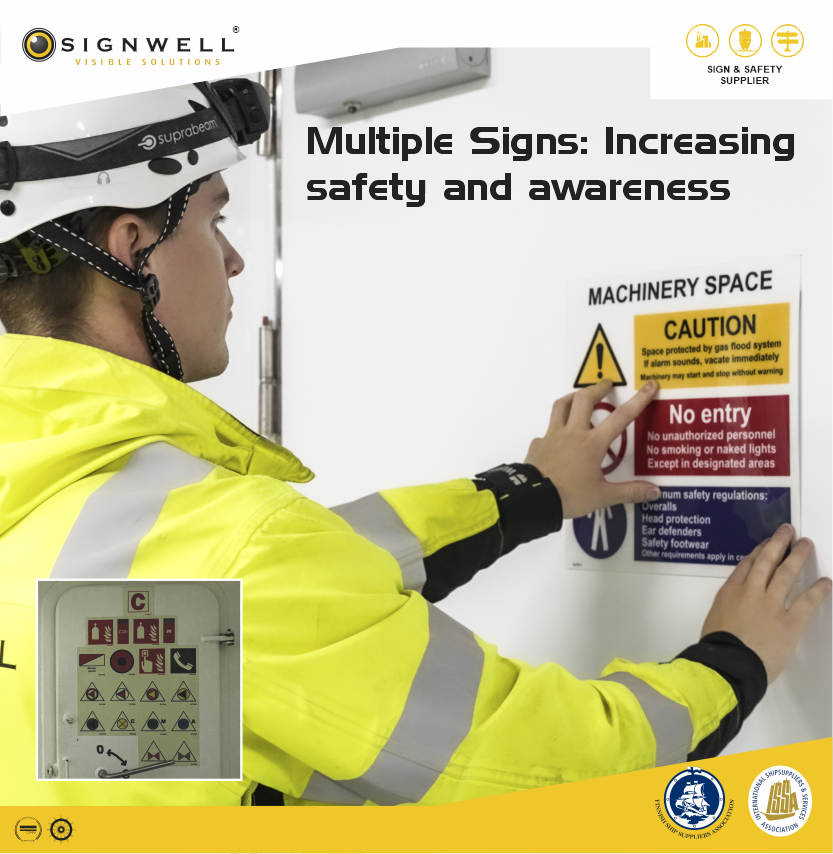
Strategic positioning of IMO signs can mean the difference between successful emergency response and confusion during critical moments. Signs must be placed at decision points where crew members need directional guidance, particularly at corridor intersections and stairwell entrances.
Height specifications require most safety signs to be mounted between 1.5 and 2.0 metres above deck level, ensuring visibility for personnel of varying heights while avoiding obstruction by equipment or cargo. Viewing angles must remain unobstructed from the primary approach directions, with signs angled appropriately to catch available light sources.
Emergency escape route signs need continuous visibility along evacuation paths, with maximum spacing intervals that ensure the next sign becomes visible before the previous one is out of sight. This creates an unbroken chain of guidance from any starting point to safety.
Lighting conditions present particular challenges in marine environments. Signs must remain visible under normal lighting, emergency lighting, and complete darkness when photoluminescent properties activate. We ensure our installations account for varying light conditions throughout different areas of the vessel.
Material durability standards for marine environments
Marine environments subject signage to extreme conditions that would quickly destroy standard commercial signs. Temperature fluctuations from freezing weather to engine room heat require materials that maintain their properties across ranges from -40°C to +150°C.
UV resistance becomes critical for signs exposed to intense sunlight reflecting off water surfaces. Quality IMO signs use materials that resist fading and degradation even after years of continuous UV exposure. Salt spray and humidity create additional challenges, requiring corrosion-resistant substrates and adhesives that maintain their bond strength over time.
Photoluminescent properties must meet specific brightness and duration standards after light exposure. These materials absorb ambient light and release it gradually, providing visibility during power failures or smoke-filled conditions. The charging and discharge characteristics must remain consistent throughout the sign’s operational life.
Modern IMO signs increasingly use PVC-free and halogen-free materials that meet environmental standards while maintaining durability. These materials offer the additional benefit of producing fewer toxic gases if exposed to fire, contributing to overall vessel safety beyond their primary marking function.
What happens when vessels fail IMO inspections
Port state control inspections can bring vessel operations to an immediate halt when IMO sign deficiencies are discovered. Inspectors have the authority to detain vessels until all safety signage meets required standards, resulting in costly delays and potential cargo claims.
Financial penalties extend beyond immediate detention costs. Insurance companies may refuse claims related to incidents where inadequate signage contributed to injuries or property damage. Regulatory violations can also trigger increased inspection frequencies, creating ongoing operational disruptions and additional compliance costs.
Crew safety incidents linked to poor signage create serious liability issues. When emergency response is delayed or confused due to unclear or missing signs, vessel operators face potential criminal charges in addition to civil liability. These consequences can affect company licensing and operational permits in multiple jurisdictions.
Reputation damage from safety violations spreads quickly through industry networks. Charter parties and cargo owners increasingly scrutinise vessel safety records, potentially leading to reduced business opportunities and lower charter rates for non-compliant vessels.
Essential documentation and certification processes
Proper documentation forms the backbone of IMO sign compliance, starting with type approval certificates that verify each sign meets international standards. These certificates must be maintained for all safety signage and presented during inspections to demonstrate compliance.
Installation records document the placement, mounting methods, and inspection dates for each sign aboard the vessel. These records help track maintenance schedules and provide evidence of systematic compliance management. Maintenance logs must record any sign replacements, cleaning procedures, and photoluminescent charging verification.
Inspection reports from qualified surveyors provide independent verification of signage compliance. These reports should document sign condition, visibility, and placement accuracy according to current regulations. Regular professional inspections help identify potential issues before they become compliance violations.
Vessel certification processes require comprehensive signage documentation as part of safety management system audits. Maintaining organised records with clear cross-references between physical sign locations and documentation helps streamline these processes and demonstrates systematic safety management to regulatory authorities.
IMO sign compliance demands attention to detail across multiple technical and regulatory requirements. From understanding the four mandatory sign classifications to maintaining proper documentation, each element plays a crucial role in vessel safety and operational continuity. The consequences of non-compliance extend far beyond simple regulatory violations, affecting crew safety, operational costs, and business reputation. By focusing on proper materials, strategic placement, and systematic documentation, maritime operators can ensure their vessels meet these critical requirements while protecting their most valuable assets: their crew and their business operations.
This content was generated with the help of AI and it may contain mistakes