What are IMO signs?
8.04.2026
IMO signs are internationally standardised safety symbols mandated by the International Maritime Organization for use on ships and offshore platforms worldwide. These visual communication tools ensure universal understanding of safety information, regardless of crew nationality or language barriers. They play a critical role in emergencies, where clear, immediate communication can save lives.
What are IMO signs and why are they essential for maritime safety?
IMO signs are standardised safety symbols created by the International Maritime Organization to provide universal safety communication aboard vessels. These internationally recognised symbols eliminate language barriers by using pictographs and standardised colours that convey critical safety information instantly to crew members of any nationality.
The importance of IMO signs becomes apparent in emergencies, when seconds matter. When a fire breaks out or evacuation becomes necessary, crew members must understand safety instructions immediately, without delays caused by translation. These signs create a visual language that transcends linguistic differences, ensuring everyone aboard can identify escape routes, safety equipment locations, and hazardous areas.
Maritime vessels operate with international crews who speak multiple languages, making traditional text-based signage inadequate for safety communication. IMO signs solve this challenge by establishing a global standard in which a fire extinguisher symbol means the same thing whether the viewer speaks English, Mandarin, or Arabic. This universal understanding is particularly crucial in high-stress emergencies, when cognitive processing may be impaired.
What types of IMO signs are required on ships and offshore platforms?
Six main categories of IMO signs are required on maritime vessels: fire safety signs, emergency escape route markers, prohibition signs, mandatory action signs, warning signs, and information signs. Each category serves a specific safety communication purpose and must be strategically placed throughout vessels in accordance with international regulations.
Fire safety signs include symbols for fire extinguishers, fire hoses, fire alarm call points, and fire blankets. These bright red signs with white pictographs help crew members quickly locate firefighting equipment during emergencies. Emergency escape route markers use green backgrounds with white arrows and running figures to clearly indicate evacuation paths and assembly points.
Prohibition signs feature red circles with diagonal lines crossing out dangerous actions, such as “No Smoking” or “No Entry” symbols. Mandatory action signs use blue backgrounds with white symbols to indicate required safety behaviours, such as wearing personal protective equipment. Warning signs employ yellow triangles with black symbols to alert personnel to hazards such as electrical dangers or toxic substances.
Information signs provide general safety guidance using green or blue backgrounds, depending on their specific purpose. These might indicate first-aid stations, emergency telephone locations, or safety equipment storage areas throughout the vessel.
How do IMO signs comply with SOLAS and international maritime regulations?
IMO signs must comply with SOLAS Convention requirements outlined in Chapter II-2 and Chapter III, which mandate specific safety signage standards for fire protection and life-saving appliances. These regulations specify exact design requirements, placement guidelines, and maintenance standards that vessel operators must follow to ensure compliance.
The SOLAS Convention requires IMO signs to meet strict visibility and durability standards, ensuring they remain legible during normal operations and emergency conditions. Signs must be positioned at appropriate heights, adequately illuminated, and kept free of obstruction. Regular inspection and maintenance schedules are mandated to ensure signs remain in proper condition throughout a vessel’s operational life.
Classification societies play a vital role in ensuring IMO sign compliance during vessel inspections and surveys. These organisations verify that signage meets international standards, is properly installed, and functions as intended. They conduct regular audits to confirm ongoing compliance and may require corrective action if deficiencies are identified.
Vessel operators must maintain detailed records of sign installation, inspection, and maintenance activities. This documentation demonstrates compliance and helps identify when signs require replacement or updating to meet evolving international standards.
What materials and standards must IMO signs meet for marine environments?
IMO signs must meet rigorous material specifications, including photoluminescent properties, UV resistance, temperature tolerance from -30°C to +60°C, and compliance with ISO standards and IMO Resolution A.752(18). These requirements ensure signs remain visible and functional in harsh marine environments over extended periods.
Photoluminescent properties are essential in emergencies, when electrical power may be compromised. Signs must absorb ambient light during normal operations and provide adequate visibility for specified periods in darkness or smoke. The photoluminescent materials must maintain their charging and glowing capabilities throughout the sign’s operational life.
Marine environments subject signs to salt spray, humidity, temperature fluctuations, and intense UV radiation. Materials must resist corrosion, fading, and degradation while maintaining legibility and adhesion. High-quality marine-grade materials typically include UV-stabilised plastics, corrosion-resistant metals, and specialised adhesives designed for maritime applications.
ISO 15370:2021 and IMO Resolution A.752(18) specify exact technical requirements for sign construction, including colour specifications, symbol dimensions, and performance testing standards. These standards ensure consistency across manufacturers and help ensure that signs perform reliably regardless of their origin or installation location.
Where should IMO signs be installed on vessels for maximum effectiveness?
Strategic placement guidelines require IMO signs to be positioned along escape routes, near safety equipment, at decision points, and in high-risk areas where visibility and accessibility are optimised. Proper installation considers viewing angles, lighting conditions, and potential obstructions that might compromise sign effectiveness during emergencies.
Escape route signage must be installed at regular intervals along evacuation paths, typically every 10-15 metres, with additional signs at corridor intersections and stairwell entrances. Signs should be mounted at consistent heights between 1.5 and 2.0 metres above deck level to ensure visibility above typical obstructions while remaining accessible to crew members of varying heights.
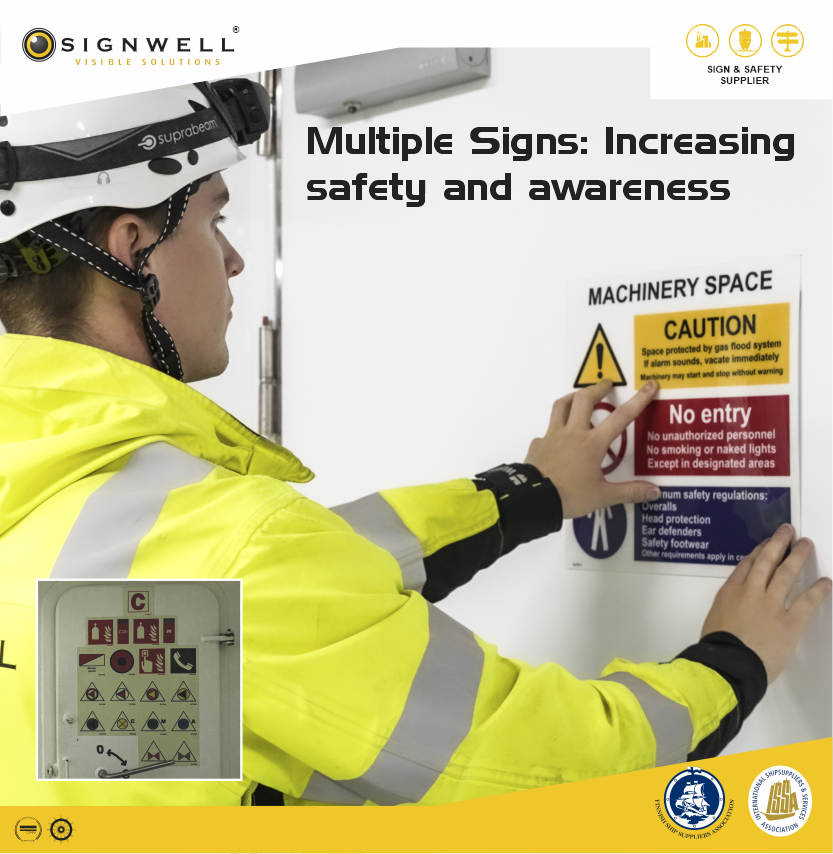
Machinery spaces require specialised sign placement due to equipment density and potential visibility challenges. Warning signs must be positioned at entry points and near specific hazards, while emergency equipment signs should be located directly above or adjacent to the equipment they identify. Adequate spacing prevents visual clutter while ensuring comprehensive coverage.
Accommodation areas need clear emergency signage that guides occupants from sleeping quarters to muster stations via the safest available routes. Signs must be visible in both normal and emergency lighting conditions, with photoluminescent properties providing backup visibility when electrical systems fail. Regular assessment ensures that modifications or new equipment installations do not compromise sign visibility or create confusion during evacuations.