9 Common IMO Sign Mistakes That Cost Lives
20.02.2026
When seconds count during a maritime emergency, properly installed and maintained IMO signs can mean the difference between life and death. Yet despite decades of international safety regulations, preventable accidents continue to occur due to seemingly minor oversights in safety signage systems. These mistakes don’t just risk regulatory compliance; they create genuine hazards that can trap crew members and passengers when they need clear guidance most.
Understanding the most common IMO sign failures helps vessel operators, shipbuilders, and safety managers prevent these dangerous oversights. From material choices to placement decisions, each element of your safety signage system plays a critical role in emergency response effectiveness.
Using non-compliant materials for critical safety signs
The choice of materials for IMO sign systems directly impacts their performance when lives depend on them. Many operators unknowingly compromise safety by selecting signs that appear adequate under normal conditions but fail catastrophically during emergencies.
Standard plastic signs often become brittle in extreme temperatures, crack under impact, or lose visibility when exposed to smoke and heat. Maritime environments demand materials that maintain their integrity across temperature ranges from freezing deck conditions to engine room heat. Fire-resistant properties become essential when emergency situations involve flames or high temperatures that could render ordinary signage unreadable.
Photoluminescent properties in quality IMO signs provide visibility even when electrical systems fail. This capability proves invaluable during power outages or when smoke obscures traditional lighting. Signs manufactured without proper photoluminescent materials leave crew members navigating in darkness during the most critical moments of an emergency.
We’ve observed how premium materials such as PVC-free and halogen-free compounds not only meet environmental standards but also provide superior durability. These materials resist UV degradation, maintain flexibility in extreme temperatures, and continue functioning effectively for years beyond standard alternatives.
Incorrect placement of evacuation route signage
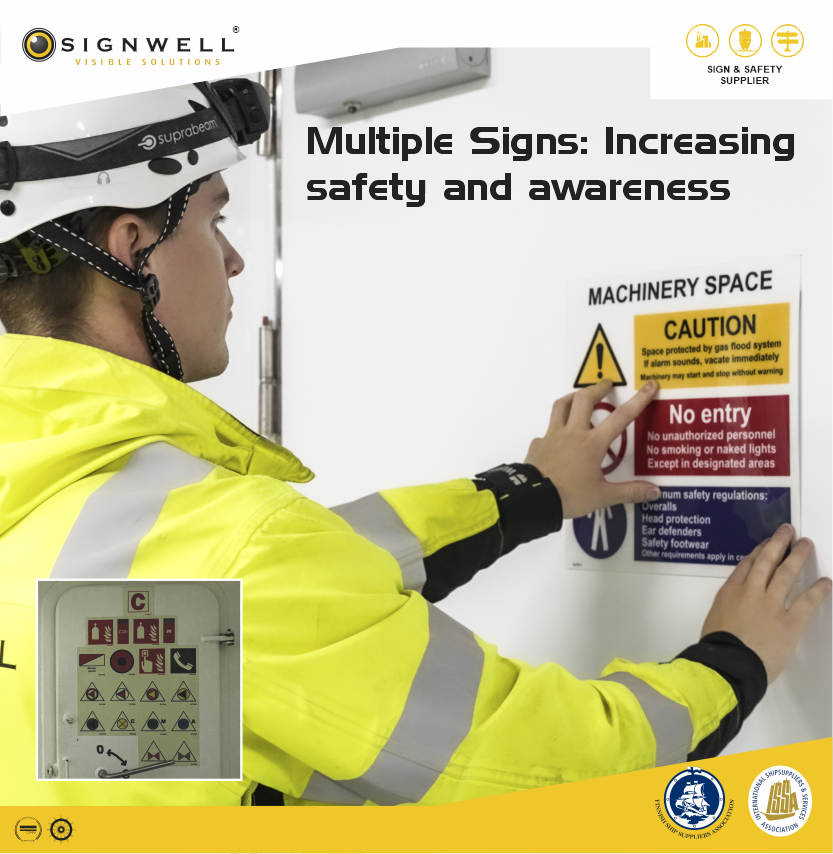
Even the highest-quality signs become useless when positioned incorrectly. IMO standards specify precise placement requirements based on human behaviour patterns during emergency situations, yet installation teams frequently overlook these critical details.
Common placement errors include mounting signs too high for visibility during smoke-filled conditions, positioning them where they’re obscured by equipment or structural elements, and failing to maintain consistent sight lines along evacuation routes. Emergency signage effectiveness depends on crew members being able to follow a clear visual path from any location to safety.
Proper positioning requires understanding how people move during stressful situations. Panic causes individuals to focus on their immediate surroundings rather than scanning broadly for guidance. This means signs must be placed at eye level and positioned where natural movement patterns will bring people into contact with them.
The spacing between signs also matters significantly. Gaps in visual guidance create confusion points where evacuating personnel may hesitate or choose the wrong direction. International standards specify maximum distances between signs to ensure continuous guidance throughout evacuation routes.
Inadequate low location lighting systems implementation
SOLAS requirements for Low Location Lighting systems address a fundamental challenge: traditional overhead emergency lighting becomes ineffective when smoke fills corridors and compartments. Yet many vessels still rely on outdated lighting approaches that fail precisely when needed most.
Proper 3L systems guide personnel along evacuation routes by providing illumination at floor level, below the typical smoke layer that develops during fires. Installation mistakes often include inadequate spacing between lighting elements, poor integration with existing emergency systems, and failure to ensure a continuous power supply during emergencies.
Modern photoluminescent 3L systems offer advantages over traditional electrical alternatives in many applications. These systems charge from ambient lighting and continue providing guidance without electrical power. However, they require proper charging exposure and strategic placement to maintain effectiveness.
Electrical 3L systems provide consistent illumination but demand reliable backup power systems and regular maintenance. The choice between photoluminescent and electrical approaches depends on specific vessel requirements, but both require careful planning and professional installation to meet SOLAS standards.
Missing or outdated pipe marking identification
ISO 14726 requirements for marine piping systems exist because unclear pipe identification creates serious safety hazards during both routine maintenance and emergency situations. Unmarked or incorrectly marked piping systems can lead to dangerous mistakes when crew members need to quickly isolate systems or access emergency equipment.
Proper pipe marking prevents accidents by clearly identifying contents, flow direction, and pressure ratings. During emergencies, this information becomes critical for damage control teams who must rapidly assess and respond to system failures. Unclear markings can result in opening the wrong valves, connecting incompatible systems, or exposing personnel to hazardous substances.
Maintenance operations also depend on accurate pipe identification. Incorrect assumptions about pipe contents or pressure ratings can lead to serious injuries when technicians access systems for repair or inspection. Clear, standardised marking prevents these avoidable accidents.
Inconsistent multilingual safety communication standards
International crews require IMO sign systems that communicate effectively across language barriers. Maritime accidents often involve communication failures, and safety signage provides a crucial backup communication method when verbal instructions become impossible or ineffective.
IMO standards recognise this challenge by requiring multilingual signage in specific situations, yet many vessels implement inconsistent approaches that create confusion rather than clarity. Mixing different languages randomly or using poor translations can actually increase danger by providing conflicting information.
Effective multilingual signage follows standardised symbol systems wherever possible, supplemented by text in appropriate languages for the vessel’s typical crew composition. Consistency across all signage ensures crew members can rely on familiar patterns during emergencies when cognitive capacity becomes limited by stress.
Failure to maintain and inspect safety signage systems
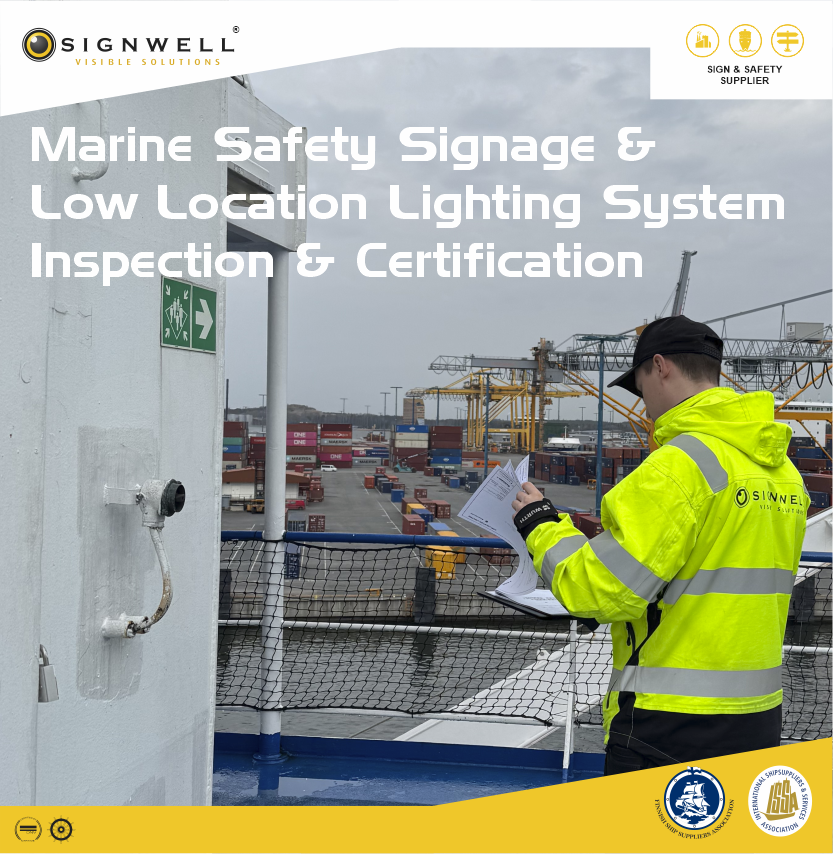
Even perfectly installed signage systems deteriorate over time without proper maintenance. Maritime environments expose signs to salt spray, UV radiation, temperature extremes, and physical wear that gradually compromise their effectiveness.
Regular DNV-certified inspections identify deterioration before it compromises safety. These professional assessments evaluate not just visible damage but also photoluminescent performance, material integrity, and compliance with current standards. Many operators underestimate how environmental factors affect sign performance over time.
Maintenance schedules should address cleaning, damage assessment, and performance testing. Photoluminescent signs require periodic charging verification, while electrical systems need power supply and LED functionality checks. Documentation of these activities demonstrates compliance and helps identify patterns that might indicate systemic issues.
Preventing these common IMO sign mistakes requires understanding both technical requirements and practical implementation challenges. Quality materials, proper installation, regular maintenance, and professional oversight create signage systems that truly protect lives when emergencies occur. Investing in comprehensive safety signage systems pays dividends in regulatory compliance, crew confidence, and, most importantly, emergency response effectiveness.