Best IMO Signs for Maritime Safety Compliance 2024
6.05.2026
Maritime safety compliance has become increasingly stringent, with port state control inspections focusing heavily on proper signage systems. Non-compliant IMO signs can lead to vessel detentions, substantial fines, and operational delays that cost companies thousands of pounds per incident. Modern vessels require signage that meets the latest SOLAS requirements while withstanding harsh marine environments for years without degradation.
The maritime industry has evolved significantly in 2024, with updated enforcement protocols and enhanced material standards for safety signage. Understanding which IMO signs your vessel needs and how to implement them correctly can mean the difference between smooth operations and costly compliance failures. We will explore the essential requirements, selection criteria, and installation best practices that keep vessels compliant and crews safe.
Why IMO sign compliance failures cost maritime companies millions
Port state control inspections have intensified their focus on safety signage systems, with non-compliant IMO signs ranking among the top deficiency categories in recent maritime authority reports. When inspectors identify substandard or missing signage, vessels face immediate detention until corrections are made, resulting in daily operational costs that can exceed £10,000 per day for larger commercial vessels.
Beyond immediate detention costs, companies face cascading financial impacts including cargo delays, crew overtime, missed charter opportunities, and potential legal liability if safety incidents occur. Insurance claims related to inadequate safety signage have increased substantially, with insurers now requiring detailed documentation of signage compliance as part of coverage assessments.
The enforcement landscape has shifted towards zero tolerance for safety equipment deficiencies. Maritime authorities worldwide have coordinated their inspection protocols, meaning a compliance failure in one jurisdiction often triggers enhanced scrutiny in subsequent ports. This creates a compounding effect in which initial signage deficiencies lead to prolonged operational disruptions across multiple voyages.
What makes IMO signs SOLAS-compliant in 2024
SOLAS-compliant IMO signs must meet the technical specifications outlined in IMO Resolution A.752(18), which establishes minimum standards for photoluminescent properties, material durability, and visibility performance. The resolution requires signs to maintain luminance levels of at least 15 mcd/m² after 10 minutes and 2 mcd/m² after 60 minutes following light source removal.
Material requirements have evolved to address environmental concerns and performance standards. New-generation IMO signs use PVC-free and halogen-free materials that exceed standard requirements while providing enhanced durability in marine environments. These advanced materials resist UV degradation, saltwater corrosion, and temperature extremes from -40°C to +150°C.
The photoluminescent properties of compliant signs rely on high-grade phosphorescent pigments that charge rapidly under ambient light and maintain visibility throughout extended periods of darkness. Quality IMO signs incorporate multiple layers of protective coatings that preserve photoluminescent performance while resisting physical damage from cleaning, impact, and weather exposure.
Essential IMO signs every vessel must display
Every vessel must display specific categories of mandatory IMO signage to ensure crew and passenger safety during normal operations and emergency situations. Escape route signs form the foundation of any compliant system, clearly marking primary and secondary evacuation paths from all areas of the vessel to designated muster stations and lifeboat launching positions.
Fire safety equipment markers identify the locations of fire extinguishers, fire hoses, emergency shut-offs, and firefighting equipment. These signs must be positioned to remain visible even when equipment is removed for use, ensuring replacement equipment can be located quickly during extended emergency responses.
Muster station indicators and emergency equipment identification signs complete the essential signage requirements. Muster stations require clear numerical identification visible from multiple approach angles, while emergency equipment signs must identify lifejackets, immersion suits, emergency communications equipment, and medical supplies according to standardised symbols and colour coding.
How to choose the right IMO signs for different vessel types
Passenger ships require enhanced signage density and multilingual capabilities to accommodate diverse passenger populations who may be unfamiliar with vessel layouts. Selection criteria for passenger vessels emphasise larger sign dimensions, simplified pictographic symbols, and strategic placement at decision points throughout passenger areas.
Cargo vessels and offshore platforms face different challenges, requiring signage systems that withstand industrial operations, chemical exposure, and extreme weather conditions. These environments demand signs with reinforced mounting systems, chemical-resistant coatings, and enhanced visibility properties that perform reliably in low-light industrial settings.
Material specifications vary significantly based on the operational environment. Vessels operating in Arctic conditions require signs rated for extreme cold, while those in tropical regions need enhanced UV resistance. Chemical tankers and specialised vessels may require signs resistant to specific cargo vapours or cleaning solvents used in cargo hold maintenance.
Installation best practices for maximum safety effectiveness
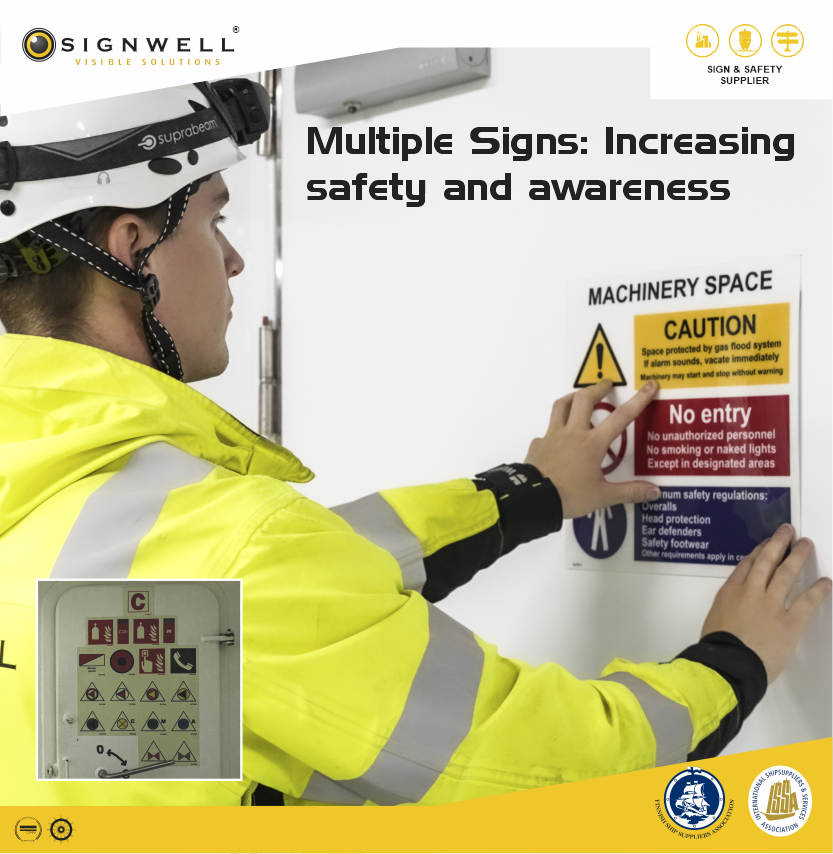
Professional installation begins with comprehensive site surveys that identify optimal positioning for maximum visibility under all lighting conditions. Positioning standards require signs to be mounted at consistent heights, typically between 1.5 and 2.5 metres above deck level, with clear sight lines unobstructed by equipment, piping, or structural elements.
Integration with low-location lighting systems creates comprehensive evacuation guidance that functions during power failures. Photoluminescent 3L-PL™ systems provide lightweight, maintenance-free guidance, while electric 3L-EP™ LED systems offer continuous illumination for extended evacuation routes of up to 1,000 metres.
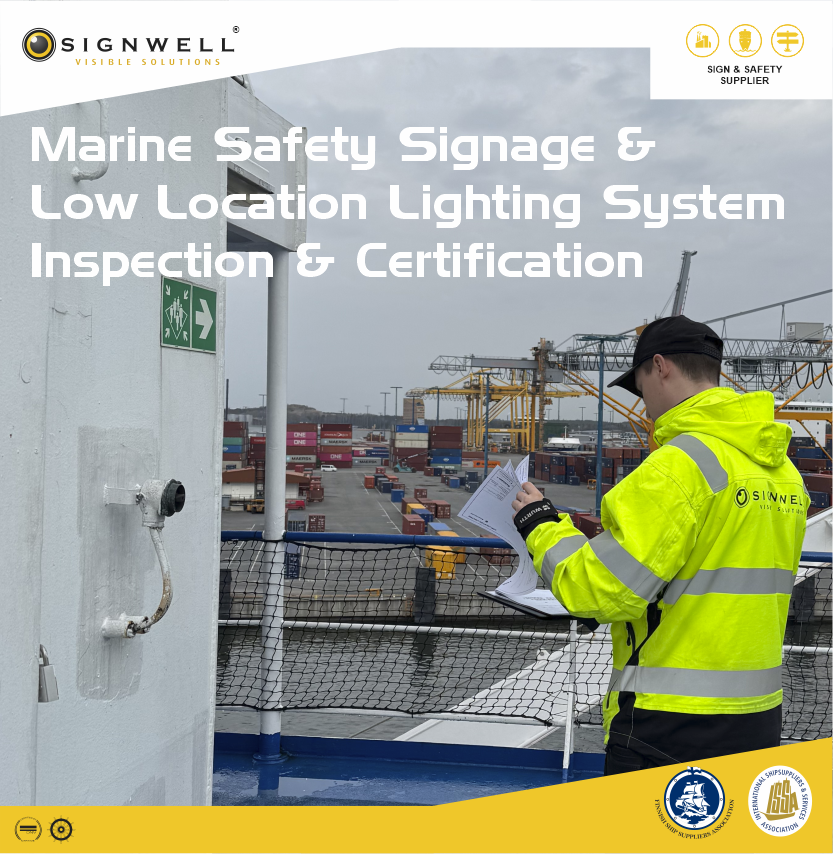
Maintenance requirements include regular cleaning schedules to remove salt deposits and environmental contamination that can reduce photoluminescent performance. Inspection protocols should document sign condition, mounting integrity, and visibility performance quarterly, with immediate replacement of damaged or degraded signs to maintain continuous compliance.
Implementing compliant IMO signage systems requires careful planning, quality materials, and professional installation to ensure long-term performance. Investment in proper signage systems pays dividends through reduced inspection risks, enhanced safety performance, and operational reliability. We specialise in providing comprehensive IMO signage solutions that meet the latest regulatory requirements while delivering exceptional durability in demanding marine environments.