Where should evacuation signs be placed on ships?
22.09.2026
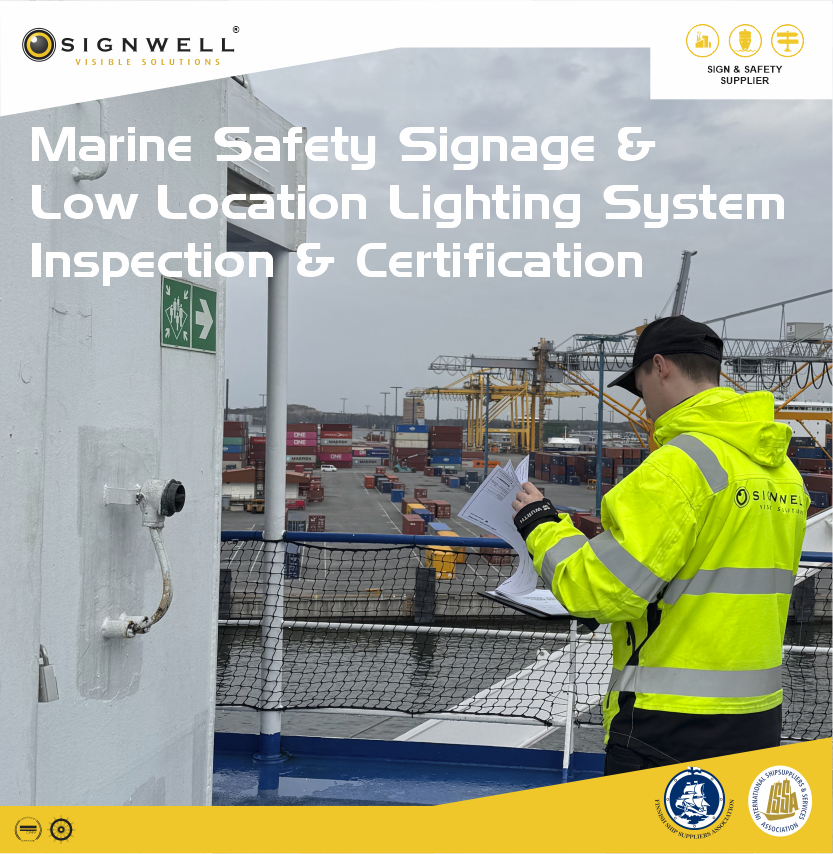
Proper evacuation sign placement on ships ensures that crew and passengers can safely navigate to muster stations and lifeboats during emergencies. Signs must be positioned according to SOLAS regulations at decision points, along escape routes, and in all compartments, with clear visibility and appropriate spacing. Effective placement considers both normal conditions and emergency scenarios with reduced visibility.
What are the mandatory evacuation sign placement requirements for ships?
The SOLAS (Safety of Life at Sea) Convention and IMO regulations require evacuation signs at all decision points where people must choose between escape routes. IMO sign placement must follow Resolution A.752(18) standards, ensuring that signs are visible from at least 5 metres away and positioned no more than 2 metres above deck level.
Every vessel must display evacuation route signs at corridor intersections, stairway entrances, and exits from accommodation areas. Signs indicating muster stations and lifeboat positions require placement at regular intervals along escape routes, with maximum spacing of 10 metres in corridors and 5 metres on stairways.
Compliance standards mandate that all evacuation signage use internationally recognised symbols and pictograms. The signs must be constructed from fire-resistant materials and maintain visibility for the duration specified in SOLAS requirements. Regular inspections ensure continued compliance with these sailing safety regulations throughout the vessel’s operational life.
Where should evacuation route signs be positioned along escape pathways?
Evacuation route signs must be positioned at eye level, between 1.5 and 2 metres high, ensuring visibility over people’s heads during crowded emergency situations. Signs should appear at every change of direction, with additional placement every 10 metres along straight corridors and every 5 metres on stairways.
Strategic positioning includes placement at the beginning of each escape route, at every intersection or junction, and immediately before and after doorways. Stairway signs require positioning at each landing, clearly indicating the direction to continue towards muster stations or assembly areas.
The spacing intervals ensure that at least one evacuation sign remains visible from any position along the escape route. This redundancy becomes critical when smoke or debris might obscure individual signs during actual emergencies. Each sign must point clearly in the direction of travel, using arrows and internationally recognised symbols.
How should evacuation signs be placed in different ship compartments?
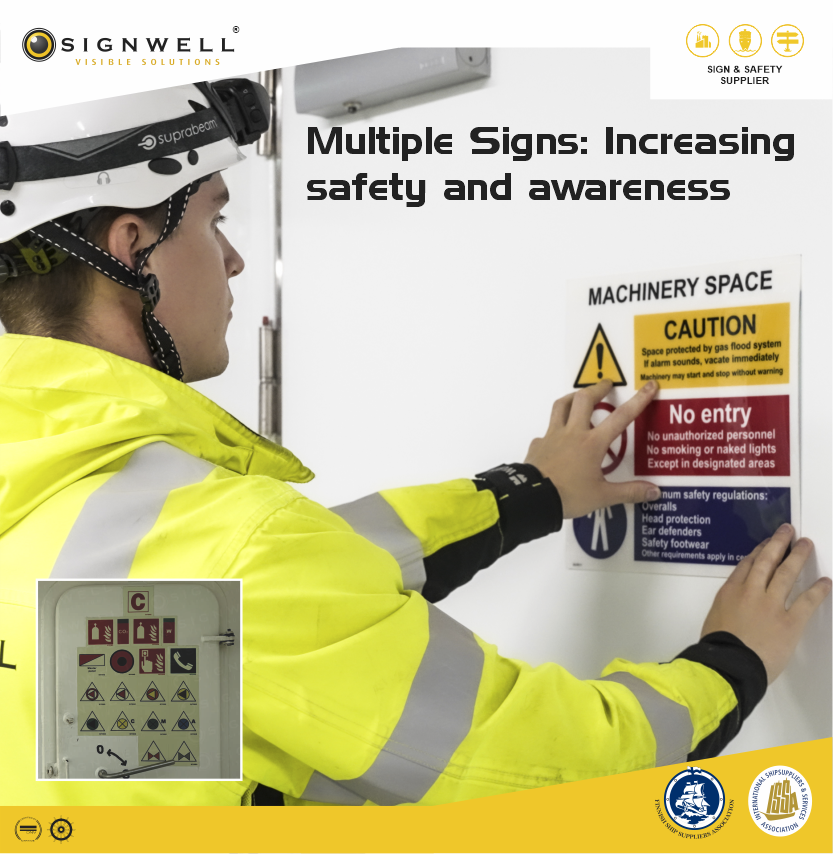
Passenger cabins require evacuation route information posted on the back of entrance doors, showing the quickest path to muster stations. Engine rooms need signs positioned near all entry points and at regular intervals throughout the space, considering the complex layout and potential obstacles.
Cargo areas present unique challenges due to changing configurations based on loading. Signs must be permanently mounted on bulkheads and positioned to remain visible regardless of cargo arrangement. Common spaces such as dining areas and lounges require signs at all exits, with additional directional signs pointing towards primary escape routes.
Bridge and control room areas need evacuation signs that account for essential personnel who may need to perform shutdown procedures before evacuating. These signs should indicate both immediate escape routes and alternative paths if primary routes become blocked. Each compartment type requires assessment of its specific risks and traffic patterns.
What makes evacuation sign placement effective in low-visibility conditions?
Photoluminescent evacuation signs charge from ambient light and continue glowing for hours during power failures or smoke conditions. These signs must be positioned where they receive adequate light exposure during normal operations while remaining visible at floor level, where clearer air might exist during fires.
LED-powered evacuation signs provide consistent illumination connected to emergency power systems. The placement strategy for electronic signs includes positioning them low on bulkheads, typically 300–400 mm above deck level, where visibility remains better during smoke-filled conditions.
Effective low-visibility placement combines both lighting technologies with tactile guidance systems. Signs should be positioned to create continuous visual guidance from any starting point to safety, with backup illumination ensuring that the path remains clear even when primary lighting fails. The key is redundancy through multiple sign types and strategic positioning that accounts for how people move during actual emergency conditions.
Proper evacuation sign placement combines regulatory compliance with practical emergency response needs. The integration of mandatory positioning requirements with effective visibility strategies ensures that all persons aboard can navigate safely to designated assembly areas, regardless of conditions. Regular maintenance and inspection of these critical safety systems maintain their effectiveness throughout the vessel’s operational life.
Looking for IMO-compliant signage for your vessel? Explore Signwell’s IMO signs and find suitable safety signage for maritime environments.
This content was generated with the help of AI and it may contain mistakes