How does IMO signage work for ship safety?
22.12.2025
IMO signage provides standardised safety communication on ships through internationally recognised symbols and signs that guide passengers and crew during normal operations and emergencies. These signs follow International Maritime Organization guidelines and SOLAS requirements to ensure consistent safety messaging across all vessels, regardless of the languages spoken on board.
What is IMO signage and why is it mandatory for ships?
IMO signage refers to standardised maritime safety signs developed by the International Maritime Organization that provide universal safety communication on vessels worldwide. These signs use internationally recognised symbols and colours to convey critical safety information without relying on language, making them essential for ships carrying passengers and crew from different countries.
The mandatory nature of IMO signage stems from the SOLAS (Safety of Life at Sea) Convention, which requires all commercial vessels to display proper safety signage for fire protection, life-saving equipment, and evacuation procedures. This standardisation prevents confusion during emergencies, when quick decision-making can mean the difference between life and death.
IMO signs follow specific design principles, including high-contrast colours, simple pictograms, and photoluminescent materials that remain visible even when normal lighting fails. The signs must withstand harsh marine environments, including salt spray, extreme temperatures, and UV exposure, whilst maintaining their visibility and adhesion properties over many years of service.
How does IMO signage guide passengers during ship emergencies?
IMO signage guides passengers during emergencies through photoluminescent and LED lighting systems that create clear evacuation pathways, even in complete darkness or smoke-filled environments. These systems use standardised symbols that overcome language barriers, allowing passengers of any nationality to understand safety instructions instantly.
During panic situations, people tend to follow visual cues rather than trying to remember verbal instructions. IMO signage exploits this psychological response by providing continuous visual guidance through Low Location Lighting systems that illuminate escape routes at floor level. This positioning remains visible even when smoke fills the upper areas of corridors and stairwells.
The photoluminescent technology charges from ambient light and glows for hours without electrical power, whilst LED systems provide backup illumination when the ship’s power fails. Both systems work together to create redundant safety networks that guide people towards muster stations, lifeboats, and other critical safety equipment via the most efficient routes available.
What are the different types of IMO signs required on vessels?
Ships must display several categories of mandatory IMO signs, including fire safety equipment markers, life-saving appliance indicators, prohibition signs, mandatory action signs, and evacuation route guidance systems. Each category serves specific safety functions and must be positioned according to international maritime regulations.
Fire safety signs indicate the location of extinguishers, fire blankets, emergency stop buttons, and fire assembly points using red backgrounds with white symbols. Life-saving equipment signs mark lifeboats, life rings, immersion suits, and first aid stations with green backgrounds for easy identification during emergencies.
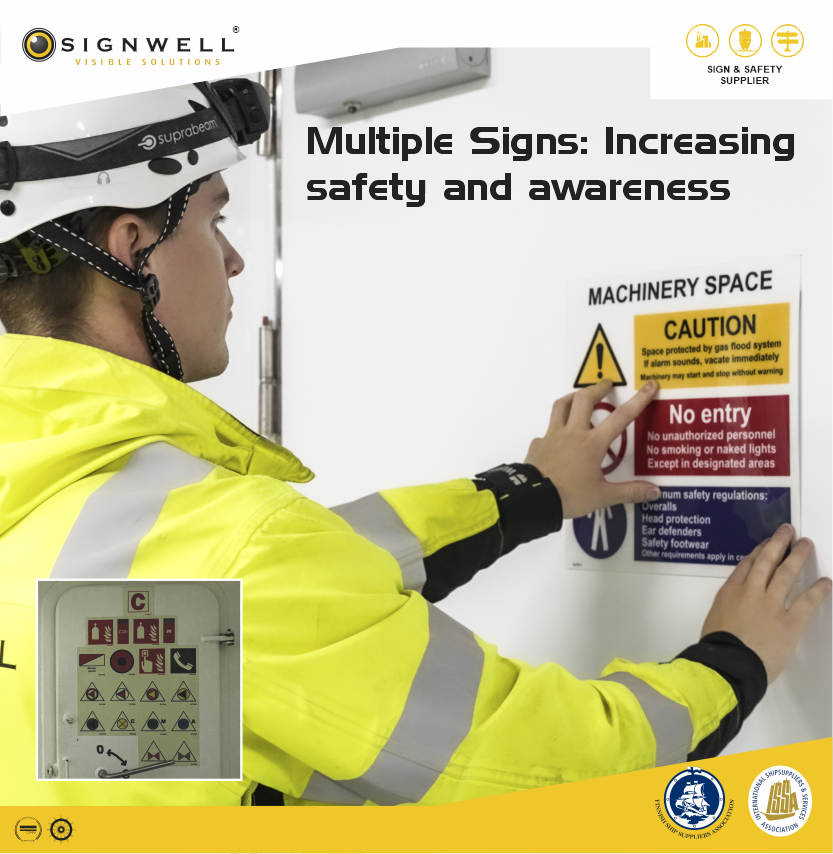
Prohibition signs use red circles with diagonal lines to indicate dangerous areas, restricted access zones, and forbidden activities. Mandatory action signs feature blue backgrounds with white symbols showing required safety equipment such as hard hats or life jackets. Low Location Lighting systems complement these signs by providing continuous guidance along evacuation routes and stairwells and towards safety equipment locations.
How do ships ensure their IMO signage meets international standards?
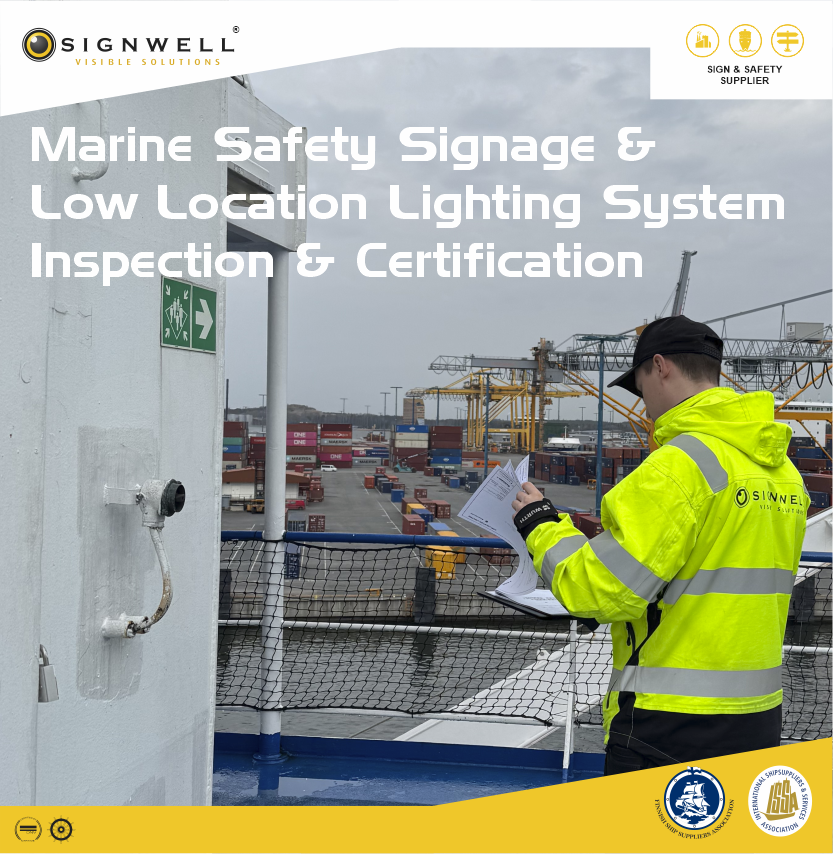
Ships ensure IMO signage compliance through DNV and classification society inspections that verify proper installation, material specifications, and positioning according to international maritime regulations. These inspections occur during initial certification, annual surveys, and major refits to maintain continuous compliance throughout the vessel’s operational life.
The certification process involves detailed documentation of sign locations, material specifications, and photoluminescent performance testing. Inspectors verify that signs meet ISO standards for marine environments, including resistance to salt spray, temperature extremes, and UV degradation. Signs must maintain their visibility and adhesion properties for specified periods under harsh conditions.
Maintenance protocols require regular cleaning, performance testing of photoluminescent materials, and replacement of damaged or faded signs. Ship operators must maintain detailed records of inspection dates, replacement schedules, and any modifications to signage systems. We provide comprehensive support throughout this process, including DNV-certified inspections and maintenance guidance to ensure ongoing compliance with evolving international standards.
Understanding IMO signage requirements helps maritime professionals create safer vessels that protect lives through proven safety communication systems. These standardised IMO signs provide the foundation for effective emergency response, whether dealing with fire situations, abandon-ship procedures, or routine safety operations in challenging marine environments.
This content was generated with the help of AI and it may contain mistakes