The Hidden Benefits of Glow in the Dark Signage
12.02.2026
When emergencies strike, every second counts. Yet many facilities rely on traditional lighting systems that can fail precisely when they’re needed most. Glow-in-the-dark signage offers a revolutionary alternative that continues working even when power fails, smoke fills corridors, and panic sets in.
This technology has evolved far beyond the dim, short-lived products many remember from decades past. Modern photoluminescent systems provide bright, long-lasting guidance that can mean the difference between a successful evacuation and a tragedy. We’ll explore how these systems work, their surprising cost benefits, and why industries from maritime to manufacturing are making the switch.
Why traditional emergency lighting fails when you need it most
Traditional emergency lighting systems have critical vulnerabilities that become apparent during actual emergencies. Power dependency represents the most obvious weakness. When fires damage electrical infrastructure or floods compromise power systems, battery-backed emergency lights often fail within hours.
Maintenance issues compound these problems. Emergency lighting requires regular testing, battery replacement, and bulb changes. In industrial environments, harsh conditions accelerate component failure. Maritime applications present additional challenges, with salt corrosion and constant vibration affecting electrical connections.
Smoke-filled environments reveal another crucial limitation. Traditional lighting creates glare and reflection in smoke, actually reducing visibility rather than improving it. The bright points of light can disorient people and make it harder to see exit routes clearly.
During high-stress situations, people’s vision changes dramatically. Tunnel vision and reduced peripheral awareness mean that conventional lighting placement often fails to guide evacuees effectively. The psychological impact of flickering or failing lights can increase panic and poor decision-making when clear thinking is essential.
How photoluminescent signage transforms emergency evacuation success
Photoluminescent technology works by absorbing ambient light energy and releasing it slowly over time. This creates reliable visibility in zero-light conditions without any external power source. The glow remains visible for hours after initial charging, providing consistent guidance throughout extended emergency situations.
In smoke-filled environments, glow-in-the-dark signage performs exceptionally well. The diffused light doesn’t create harsh reflections or glare. Instead, it provides gentle, consistent illumination that penetrates smoke more effectively than traditional lighting. This characteristic proves invaluable in fire situations, where smoke often poses a greater immediate danger than flames.
The psychological benefits extend beyond simple visibility. Continuous, steady illumination helps maintain calm and provides reassurance that evacuation routes remain clearly marked. Unlike flickering emergency lights that can increase anxiety, photoluminescent signs offer steady, dependable guidance that supports clear thinking under pressure.
Research shows that people follow continuous light paths more effectively than intermittent lighting. Glow-in-the-dark signage creates unbroken visual pathways that guide evacuees naturally toward exits, even when they’re unfamiliar with the facility layout.
The surprising cost advantages of glow-in-the-dark systems
The financial benefits of photoluminescent systems extend well beyond the initial purchase price. Elimination of electrical infrastructure represents significant savings. No wiring, conduits, or electrical panels are needed, reducing installation costs by up to 70% compared with traditional emergency lighting.
Maintenance requirements drop dramatically. Photoluminescent signs require no battery replacement, bulb changes, or electrical testing. Annual maintenance costs that typically run to thousands of pounds for traditional systems become minimal cleaning and inspection tasks.
An extended lifespan provides additional value. Quality photoluminescent materials maintain their effectiveness for over 15 years, compared with emergency lights that need component replacement every 3–5 years. This longevity translates to a lower total cost of ownership and reduced operational disruption.
Energy costs disappear entirely. While traditional emergency lighting consumes power for charging and testing, glow-in-the-dark signage operates completely independently. For large facilities, this can represent substantial ongoing savings.
Maritime and industrial applications where photoluminescent signage excels
Offshore platforms face unique challenges that make glow-in-the-dark signage particularly valuable. Salt spray, extreme weather, and limited maintenance windows create harsh conditions for electrical systems. Photoluminescent signs continue functioning reliably regardless of power system status or weather conditions.
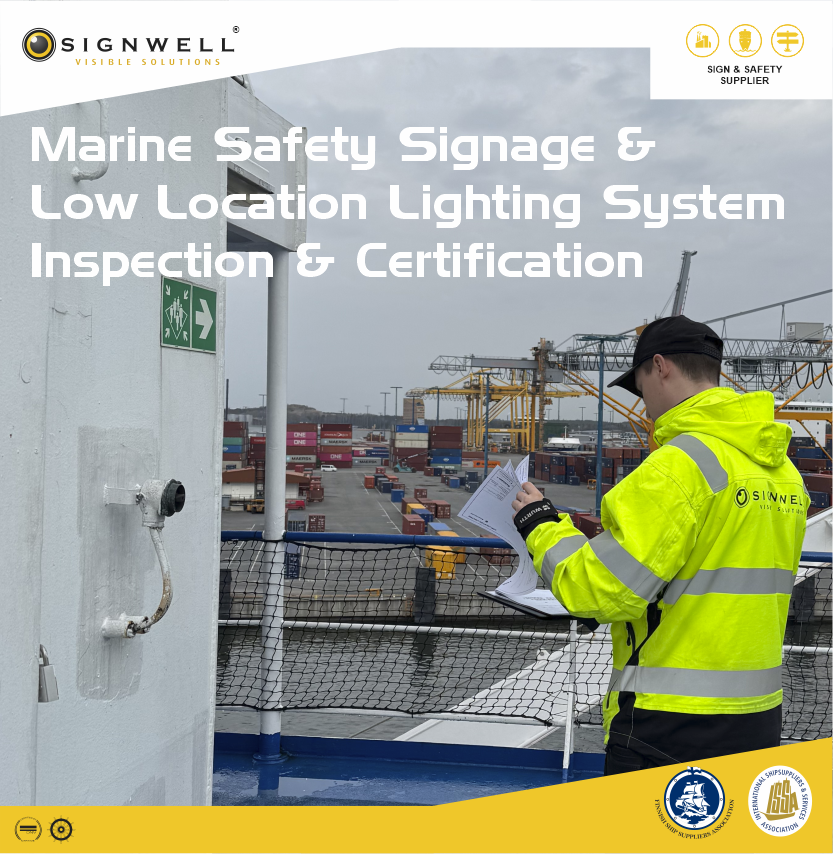
Ship evacuation systems benefit enormously from IMO-compliant photoluminescent guidance. When vessels lose power during emergencies, traditional lighting fails precisely when evacuation becomes critical. Glow-in-the-dark signage provides continuous route marking that remains visible even if the ship lists or capsizes.
Industrial facilities with hazardous materials face additional complications during emergencies. Explosive atmospheres may require power shutdown, rendering traditional emergency lighting useless. Photoluminescent systems continue operating safely without any electrical components that could create ignition sources.
Underground facilities, tunnels, and confined spaces present particular challenges for emergency lighting maintenance. Glow-in-the-dark signage eliminates the need for regular maintenance access while providing reliable guidance in environments where power failure is common.
What makes modern photoluminescent technology superior to older systems
Contemporary photoluminescent materials represent dramatic improvements over earlier generations. Advanced phosphor compounds provide brightness levels 10 times greater than products from just two decades ago. This enhanced performance ensures visibility even in challenging conditions.
Charging efficiency has improved substantially. Modern materials reach full brightness with minimal ambient light exposure and maintain visibility for extended periods. Some systems provide effective guidance for over 12 hours after initial charging.
Environmental resistance capabilities have expanded dramatically. Current photoluminescent signs withstand temperature extremes from -40°C to +150°C while maintaining performance. UV resistance prevents degradation from sunlight exposure, and chemical resistance allows use in harsh industrial environments.
Manufacturing quality has eliminated many issues that created negative perceptions of older glow-in-the-dark products. Consistent brightness, uniform coverage, and a professional appearance make modern systems suitable for any facility where safety and aesthetics both matter.
Understanding these hidden benefits of glow-in-the-dark signage reveals why forward-thinking organisations are adopting photoluminescent systems. The combination of reliability, cost-effectiveness, and superior emergency performance makes this technology an intelligent choice for any facility serious about safety. Consider evaluating your current emergency guidance systems to identify opportunities where photoluminescent solutions could provide better protection for your people and operations.
For vessels and facilities looking to implement reliable photoluminescent escape-route guidance, explore Signwell’s Low Location Lighting systems for a complete and proven solution.
This content was generated with the help of AI and it may contain mistakes